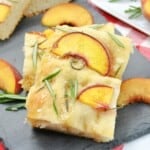
Best Focaccia Bread Recipe with Rosemary and Peach
This Peach & Rosemary Focaccia Bread is such a simple and easy Italian bread recipe!
Servings: 8 servings
Calories: 232kcal
Equipment
- Standing Mixer
Ingredients
- 1 pack active dry yeast
- ¾ cup lukewarm water
- 1½ cups bread flour
- ½ cup fine semolina flour
- ¼ cup olive oil
- 1 tsp kosher salt
- 1 large peach pitted and thinly sliced
- ¼ cup honey
- fresh rosemary chopped, for topping
Instructions
- Whisk together 3⁄4 cup of lukewarm water and yeast in a large bowl until frothy.
- Mix bread flour, semolina flour, olive oil, and honey in a standing mixer with the paddle attachment. Add the yeast mixture to the standing mixer and beat until combined.
- Incorporate salt and switch to the dough hook attachment. Knead for 5 minutes or until the dough is smooth and slightly tacky.
- Knead the dough about three times on a floured surface and form it into a ball.
- Oil the sides of the bowl and place the dough inside. Cover with plastic wrap and set in a warm area for 30 minutes or until puffy for the first rise.
- Grease a quarter sheet pan and transfer the dough to the pan.
- Stretch the dough into a rectangle within the prepared pan.
- Fold the dough lengthwise in half, then crosswise in half. Repeat the fold to form a rectangle.
- Cover and set in a warm place for 1 hour; let the dough rise until the dough has doubled in size.
- Preheat your oven to 200℉ degrees, then turn it off to create a warm spot for the dough.
- After the second rise and the dough has doubled, remove the plastic wrap and preheat the oven to 400℉ degrees.
- Stretch the dough to fill the baking pan, creating indentations with your fingers.
- Drizzle with a little olive oil, ensuring it covers all the top of the dough.
- Arrange peach slices on the surface of the dough and sprinkle with rosemary.
- Cover and allow to rest for 30 minutes.
- Bake for 25 minutes or until the bread is a light golden brown.
- Allow to cool for 15 minutes on a cooling rack before serving.
Notes
- Ensure your yeast is fresh before starting the recipe; outdated yeast may not activate properly, compromising the bread's rise.
- Use high-quality, extra-virgin olive oil for the best flavor. It will make a difference in the final taste of your focaccia.
- Don't rush the fermentation process. Allow the dough to rise properly until doubled in size for the perfect texture.
- Use your fingertips to gently create dimples in the dough before baking. This classic focaccia technique helps hold olive oil and toppings, adding flavor and moisture.
- If the dough seems too sticky when mixing, resist the urge to add too much additional flour. A slightly tacky dough yields a more tender bread.
- Experiment with the thickness of your focaccia by stretching the dough more or less in the pan. This can alter the bread's chewiness and crust-to-interior ratio.
- Watch your focaccia closely as it bakes, as oven temperatures can vary. Look for a light golden brown color as a sign of doneness.
Nutrition
Calories: 232kcal | Carbohydrates: 37g | Protein: 5g | Fat: 7g | Saturated Fat: 1g | Polyunsaturated Fat: 1g | Monounsaturated Fat: 5g | Sodium: 295mg | Potassium: 85mg | Fiber: 2g | Sugar: 12g | Vitamin A: 72IU | Vitamin C: 1mg | Calcium: 7mg | Iron: 1mg