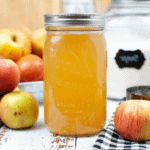
Homemade Apple Cider Vinegar Recipe from Apple Scraps
Making your own apple cider vinegar (ACV) at home is satisfying and a great way to use the whole apple. Instead of tossing out the apple peels and apple cores, why not turn them into something beneficial for your health and kitchen?
Servings: 4 Cups
Calories: 212kcal
Equipment
- Food Container Labels removable and erasable
Instructions
- For good quality apple cider vinegar, place all your apple scraps in a sterilized jar and add sugar. Fill the glass jar with water until it covers the apples and sugar, then fill to the brim. Secure the lid and shake well to thoroughly mix the sugar, apples, and water.
- Remove the lid and cover the top of the jar with a paper towel, cheese cloth, or coffee filter, securing it with just the mason jar ring or rubber band. Let this mixture sit at room temperature for about 2 weeks. A dark place like a closet, pantry, or cupboard works well for this.
- After 2 weeks, strain out the apple remnants, keeping only the liquid. Discard the apple pieces and return the liquid to the mason jar. Cover it again with a breathable cover such as a coffee filter or paper towel secured with the ring. Replace the filter or towel if it got wet during the transfer.
- Let it sit for another 4 weeks for the second fermentation, stirring occasionally. Once done, transfer the liquid to a covered bottle for storage.
Notes
- Choose Organic Apples: If possible, use organic apples to avoid pesticides and chemicals that could interfere with fermentation.
- Fermentation Temperature: Keep your jar in a warm place, ideally between 60-80°F (15-27°C). Fermentation slows down in cooler temperatures.
- Stir Daily: For the first two weeks, stir your mixture daily to ensure even fermentation and prevent mold growth.
- Taste Test: After the initial fermentation period, taste your apple vinegar to see if it has reached your desired acidity. If not, let it ferment for an additional week and test again.
- Prevent Mold: the best way to prevent mold is to ensure all apple scraps are fully submerged in water, thus preventing mold from forming on exposed fruit pieces.
- Use Clean Utensils: Always use clean utensils when handling your vinegar to avoid introducing unwanted bacteria.
Nutrition
Calories: 212kcal | Carbohydrates: 56g | Protein: 1g | Fat: 1g | Saturated Fat: 0.1g | Polyunsaturated Fat: 0.2g | Monounsaturated Fat: 0.03g | Sodium: 4mg | Potassium: 390mg | Fiber: 9g | Sugar: 44g | Vitamin A: 197IU | Vitamin C: 17mg | Calcium: 22mg | Iron: 0.4mg