How Much Meat Per Person in Grams & Ounces?

Planning a gathering and wondering if you’ve bought enough meat? You’re not alone—figuring out how much meat per person is one of the most common questions home cooks face. Whether you’re grilling for a backyard barbecue or roasting for a special dinner, getting the portions right means happy guests and minimal waste.
Save This Post!
The standard guideline is to plan for about 6-8 ounces of boneless meat per person, or 8-12 ounces if it’s bone-in. But that’s just the starting point, and the real answer depends on several factors including the type of meat, your menu, and who’s coming to dinner.
If you’re cooking for a crowd, you might want to try my slow cooker BBQ peach chicken thighs or crockpot pot roast which make feeding groups a breeze.
Reasons You’ll Love These Ideas
- Takes the guesswork out of meal planning: No more panic-buying at the grocery store or running out of food mid-party. These calculations help you shop with confidence and stay within budget.
- Reduces food waste: When you know exactly how much meat per person you need, you’ll avoid those massive leftovers that end up in the back of your fridge.
- Works for any occasion: From intimate family dinners to large holiday gatherings, these guidelines scale up or down. Whether you’re serving two people or twenty, the math stays simple.
- Considers different appetites: Kids eat less than adults, and your teenage nephew who plays football eats more than grandma. This guide helps you adjust portions for your specific crowd.
Understanding Meat Serving Sizes
The USDA recommends a standard serving size of 3 ounces of cooked meat, which is roughly the size of a deck of cards. However, when planning meals, most people serve larger portions—typically 6-8 ounces of raw meat per person. This accounts for shrinkage during cooking and ensures everyone leaves satisfied.
For bone-in cuts, you’ll need more because you’re accounting for the weight of bones. Plan for 8-12 ounces per person for items like bone-in chicken thighs, ribs, or bone-in pork chops. The bones add weight but no edible meat, so don’t let that throw off your calculations.
How Much Chicken Per Person
Boneless chicken breasts or thighs: Plan for 6-8 ounces per person. One large breast or 2-3 thighs usually fits the bill.
Bone-in chicken pieces: You’ll need 10-12 ounces per person. For a whole roasted chicken, figure roughly 1.5 pounds per person if it’s the only protein.
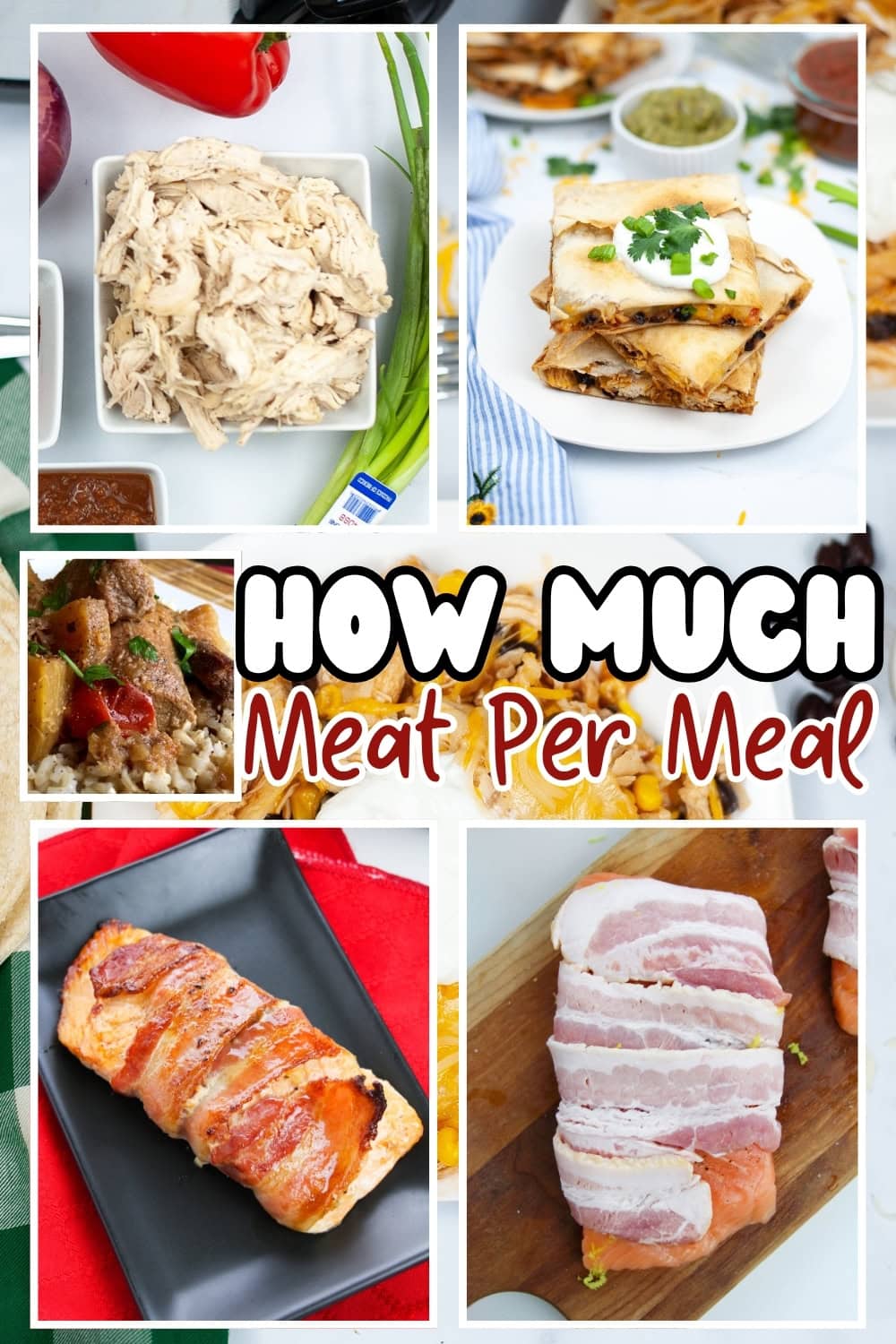
Ground chicken: Use about 4-6 ounces per person for dishes like burgers, meatballs, or tacos. My sheet pan chicken quesadilla recipe stretches the meat further with beans and cheese, making it perfect for feeding a crowd without breaking the bank.
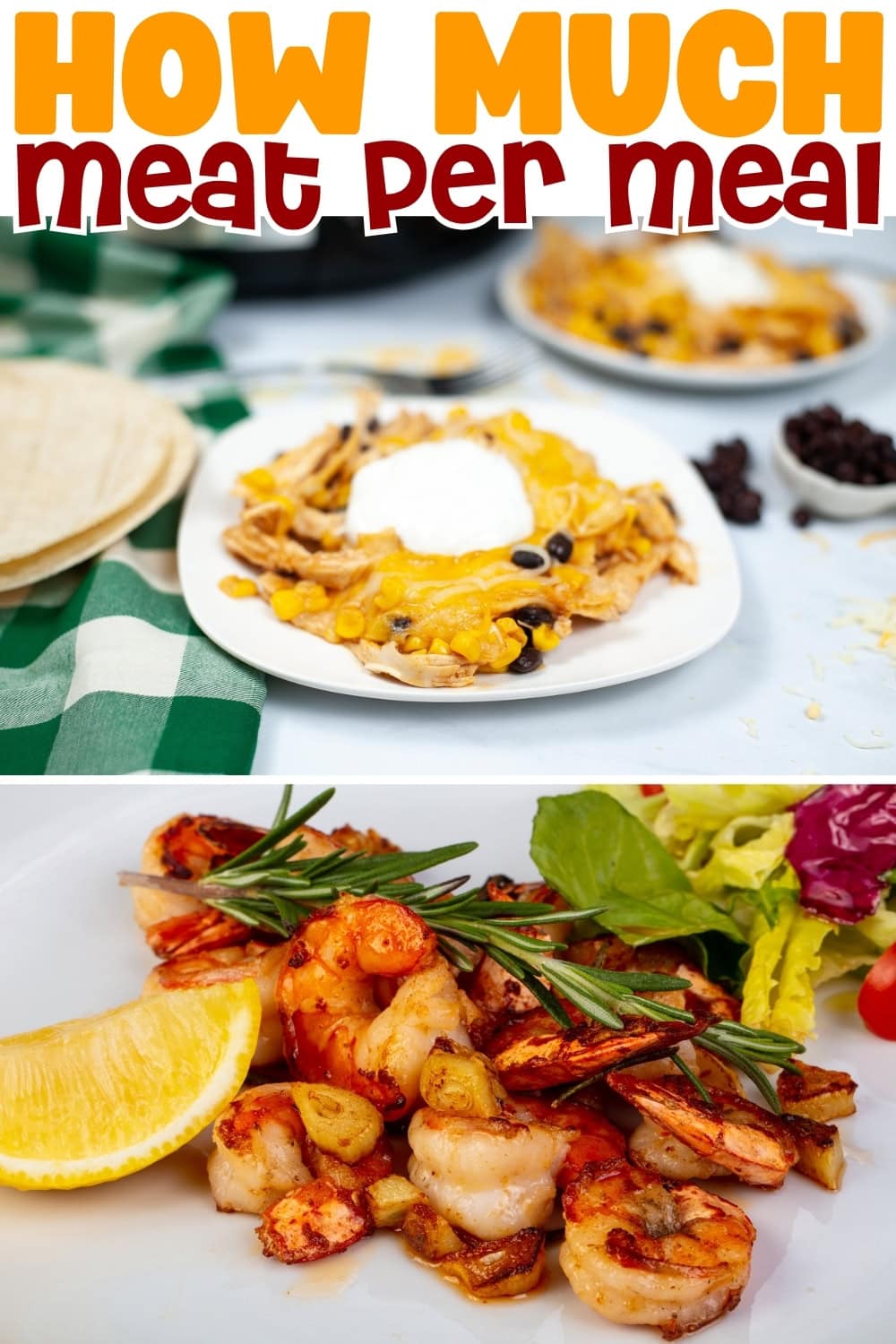
If you’re making slow cooker meals, portions can be slightly smaller since the meat stays so tender and flavorful. Try myslow cooker chicken enchiladas orslow cooker paprika chicken for fuss-free dinners, and find out about wine pairing with pork too.

How Much Beef Per Person
Steaks and boneless cuts: Aim for 8-10 ounces of raw steak per person. Hungry meat-lovers might want closer to 12 ounces, especially for premium cuts.
Ground beef: Plan for 4-6 ounces per person for burgers, tacos, or meat sauce. When making easy beef enchiladas, you can stretch a pound of beef to serve 4-6 people thanks to the tortillas, cheese, and sauce.
Roasts: For a standing rib roast or prime rib, calculate about 1 pound per person (bone-in). For boneless roasts, 8-12 ounces per person works well.
Ribs: These are trickier because of the bone-to-meat ratio. Plan for 1 pound per person, or about 4-5 ribs per adult.
How Much Pork Per Person
Pork chops: One 6-8 ounce boneless chop per person, or one 8-10 ounce bone-in chop.
Pulled pork: Raw pork shoulder yields about 50% cooked meat after shrinkage and bone removal. For pulled pork, buy 1/2 pound of raw meat per person (which gives you about 4 ounces of cooked, pulled meat). My slow cooker spicy pineapple pork butt roast is perfect for this—it shreds beautifully and the sauce keeps it moist.

Pork tenderloin: This lean cut needs 6-8 ounces per person since there’s minimal shrinkage.
Ham: For bone-in ham, plan for 3/4 pound per person. For boneless ham, 1/2 pound per person is plenty.
How Much Seafood Per Person
Fish fillets: Plan for 6-8 ounces per person of salmon, cod, or other substantial fish. My bacon-wrapped salmon recipe calls for 6-ounce fillets, which is the sweet spot for most adults.

Shrimp: For peeled and deveined shrimp, figure 6-8 ounces per person (about 15-20 medium shrimp). If you’re serving lemon garlic jumbo shrimp as a main dish, you might want to go with 8 ounces per person.
Scallops: Plan for 5-6 large scallops per person, or about 6 ounces.
Factors That Change How Much Meat You Need
What else are you serving? If meat is the only main dish, stick to the higher end of the guidelines. But if you’re serving multiple proteins or hearty sides, you can reduce portions by 25-30%.
Who’s eating? Kids under 12 typically eat about half an adult portion. Teenagers and very active adults might eat 1.5 times the standard amount.
The occasion matters: Casual weeknight dinners call for standard portions, but holiday meals like Thanksgiving or Christmas often feature larger servings. People tend to eat more at celebrations, so bump up your estimates by about 20%.
Cooking method affects shrinkage: Grilled and roasted meats lose about 25% of their weight during cooking. Braised and slow-cooked meats can lose up to 30%. Always calculate portions based on raw weight.
Tips for Buying the Right Amount
When you’re at the butcher counter, don’t be shy about asking for exactly what you need. Most butchers are happy to cut custom portions. If the pre-packaged meat is slightly more than you need, it’s usually better to buy extra than to come up short.
For large gatherings, buy from a warehouse store where you can purchase in bulk. You’ll save money and ensure you have enough. For potlucks, my crockpot recipes are lifesavers since you can prep ahead and keep food warm for hours.

Always round up slightly when in doubt. A little leftover meat never hurt anyone, and you can always use it for sandwiches, salads, or quick weeknight meals the next day.
Storing Leftover Meat
- Refrigerator: Store cooked meat in an airtight container for 3-4 days. Let it cool to room temperature before refrigerating (but don’t leave it out longer than 2 hours).
- Freezer: Most cooked meats freeze well for 2-3 months. Slice or shred the meat before freezing for easier portioning later. Wrap tightly in plastic wrap, then place in a freezer bag to prevent freezer burn.
- Reheating: Reheat meat gently to avoid drying it out. Add a splash of broth or water, cover, and heat on medium-low. For grilled meats, a quick sear in a hot pan can revive the texture.
Serving Suggestions
The beauty of getting your meat portions right is that it leaves room for delicious sides and accompaniments. Pair your protein with roasted vegetables, fresh salads, or grain dishes to round out the meal.
For Mexican-inspired dinners, serve crockpot Spanish rice alongside your protein. The rice soaks up all those wonderful meat juices and stretches the meal further. Or try grilled Mexican street corn for a fun, shareable side that adds color and flavor to your plate.
During summer gatherings, lighter sides work best. Keep things simple and let the quality of the meat shine through.
FAQs
For buffet-style service with multiple protein options, reduce each meat portion to 3-4 ounces per person. Guests will take a little of everything, so the total across all proteins should equal about 8 ounces per person.
Yes, cocktail parties require less (2-3 ounces per person for heavy appetizers), while sit-down dinners need full portions. Lunch typically requires slightly less than dinner—about 75% of the dinner portion.
Absolutely. If you know some guests don’t eat meat, subtract them from your headcount but add one extra portion to the total as a buffer. This way, meat-eaters get plenty while you avoid over-buying.
For Thanksgiving, plan for 1.5 pounds of turkey per person (this accounts for bones). Christmas prime rib needs about 1 pound per person for bone-in, or 12 ounces for boneless. Easter ham requires 3/4 pound per person if bone-in.
Increase all portions by about 25-30% when cooking for known big eaters, athletes, or teenage boys. For a group of 8 adults with hearty appetites, shop as if you’re feeding 10-11 people.