Essential Mexican Cooking Utensils: Traditional Tools & Modern Alternatives


Ever wondered what gives authentic Mexican cooking its distinctive character? Beyond the spices and ingredients, traditional Mexican cooking utensils play a huge role in creating those amazing flavors and textures we all love. These essential tools have been used for centuries and bring something special to Mexican cuisine that modern gadgets often can’t replicate.
Save This Post!
But don’t worry—if you’re not ready to invest in specialty equipment, I’ve got you covered with common kitchen alternatives that’ll help you create delicious Mexican dishes, too. Let’s explore these fundamental Mexican cooking tools every home chef should know about!
Reasons You’ll Love Traditional Mexican Cooking Tools
- Authentic Flavors: Traditional Mexican cooking utensils like molcajetes and comales create distinctive textures and release flavors that modern equipment simply can’t replicate.
- Built to Last: Many traditional Mexican kitchen tools are made from durable materials like volcanic rock, clay, or seasoned wood that can last for generations with proper care.
- Multi-Purpose: These essential tools often serve multiple functions in Mexican cooking, making them versatile additions to any kitchen.
- Connection to Tradition: Using authentic Mexican cooking tools connects you to centuries of culinary tradition and the time-honored techniques of Mexican cuisine.
Molcajete y Tejolote (Mortar and Pestle)
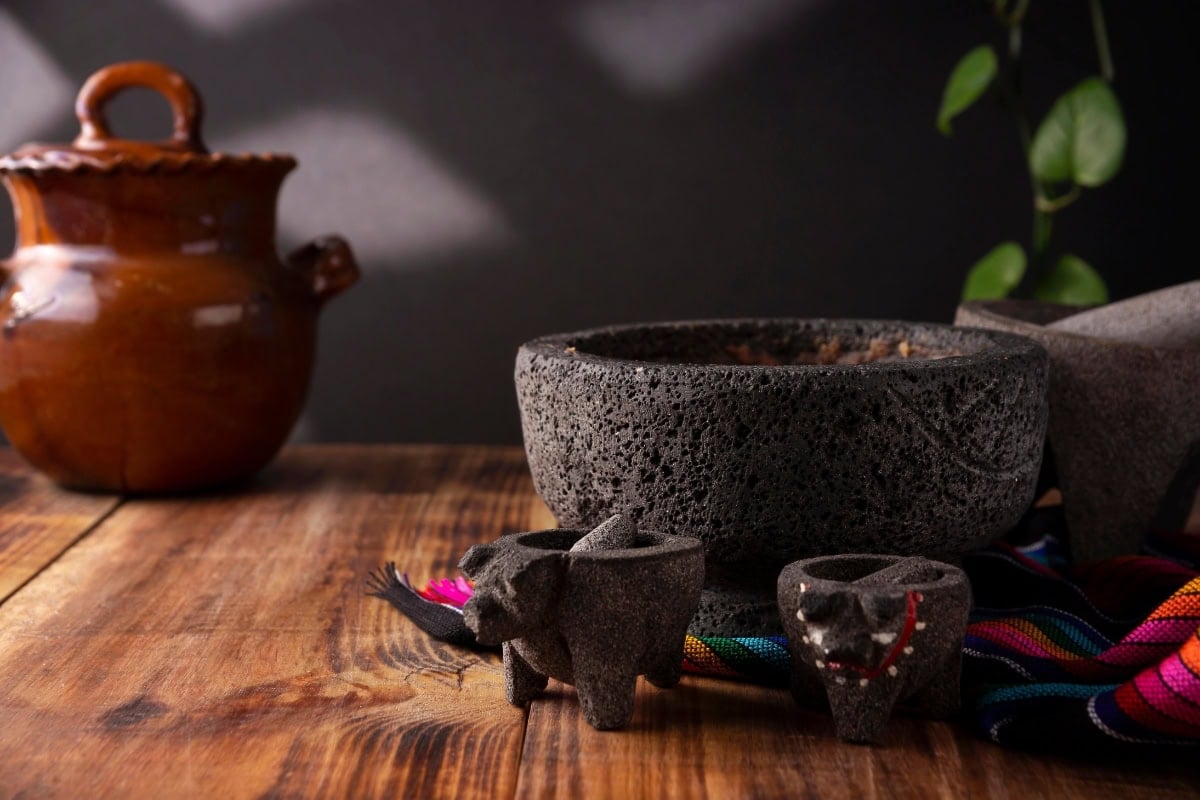
The molcajete is perhaps the most iconic of all Mexican cooking utensils. This traditional mortar and pestle made from volcanic rock has been used since pre-Hispanic times and remains essential in authentic Mexican kitchens today.
What It’s Used For
The rough, porous surface of a molcajete is perfect for grinding spices and making salsas, guacamole, and marinades. When you grind ingredients in a molcajete, the volcanic rock not only crushes them but also releases essential oils that enhance flavors in a way food processors can’t match.
Try making Copycat Chipotle Guacamole or Fresh Pineapple Salsa With Jalapenos in a molcajete for an authentic texture and enhanced flavor profile.

Modern Alternative
If you don’t have a molcajete, a standard mortar and pestle can work for smaller batches. For larger preparations, a food processor can get the job done, though the texture and flavor will be somewhat different. Just pulse carefully to avoid over-processing—you want some texture in traditional Mexican salsas and guacamoles.
Comal (Flat Griddle)
A comal is a flat, round griddle traditionally made of clay but now often made of cast iron or metal. This versatile cooking surface is used primarily for cooking tortillas but serves many other purposes in Mexican cooking.
What It’s Used For
The comal is essential for heating tortillas, toasting dried chiles, and roasting vegetables for salsas. Its flat surface conducts heat evenly, allowing for perfect charring of tomatoes, tomatillos, and peppers that create the smoky flavors characteristic of many Mexican dishes.
Use a comal to warm tortillas for Authentic Quesabirria Tacos or to char vegetables for Salsa Verde.

Modern Alternative
A cast iron skillet or flat griddle pan works as an excellent substitute for a comal. In a pinch, a non-stick frying pan can also do the job, though it won’t provide the same level of char or heat distribution.
Tortilla Press (Prensa para Tortillas)
A tortilla press is a simple yet ingenious device consisting of two plates hinged together with a handle for leverage. Traditional presses are made of wood, though cast iron versions are now common and preferred for their durability and weight.
What It’s Used For
As the name suggests, a tortilla press is used to flatten balls of masa (corn dough) into thin, uniform circles for making fresh corn tortillas. The even pressure creates perfectly round tortillas of consistent thickness that cook evenly on a comal.
Homemade tortillas elevate simple dishes like Simple Sheet Pan Chicken and Black Bean Quesadilla or can be cut and fried to make your own Flavor-Infused Seasoned Baked Tortilla Chips.
Modern Alternative
If you don’t have a tortilla press, you can flatten masa between two heavy cutting boards or plates. Another method is to use a rolling pin, though it takes practice to get consistently round, thin tortillas. For an even easier alternative, quality store-bought corn tortillas can be a time-saver.
Olla de Barro (Clay Pot)
These traditional clay cooking pots have been used in Mexican kitchens for centuries. The porous nature of the clay allows for slow, even heat distribution and infuses dishes with a subtle earthy flavor.
What It’s Used For
Ollas de barro are perfect for slow-cooking beans, making rice, simmering stews, and preparing traditional Mexican soups like pozole. The unique properties of clay cooking enhance flavors and maintain moisture in a way that metal pots can’t replicate.
Use an olla de barro for slow-simmering Albondigas Mexican Meatball Soup or Spicy Slow Cooker Chili for enhanced depth of flavor.

Modern Alternative
A Dutch oven or heavy-bottomed pot makes a good substitute for clay cookware. For convenience, electric slow cookers or pressure cookers like Instant Pots can also be used for many traditional Mexican recipes, though the flavor profile will be slightly different.
Metate y Mano (Grinding Stone)
The metate is a large, slightly concave stone slab used with a stone rolling pin (mano) for grinding corn, cacao, and other ingredients. While less common in modern kitchens due to its size, this traditional Mexican cooking tool has historical significance and is still used in some traditional kitchens.
What It’s Used For
Historically, the metate was essential for grinding corn kernels to make masa for tortillas, tamales, and other corn-based dishes. It’s also used for grinding cacao beans for traditional Mexican chocolate and grinding spices for complex mole sauces.
Modern Alternative
Electric grain mills or high-powered blenders are the modern equivalent for grinding corn. For chocolate and spices, a food processor, spice grinder, or standard blender will work efficiently, though purists argue the texture and flavor differ from stone-ground ingredients.
Molinillo (Mexican Whisk)
The molinillo is a traditional wooden whisk with moving rings that’s used to froth Mexican hot chocolate. This beautifully carved kitchen tool is both functional and decorative.
What It’s Used For
The molinillo is rotated between the palms to create foam in hot beverages, particularly Mexican hot chocolate made with discs of stone-ground chocolate mixed with cinnamon and sometimes other spices like vanilla or chile.
Modern Alternative
A standard kitchen whisk, immersion blender, or even a milk frother can create foam in hot chocolate, though the traditional method of rolling the molinillo between your palms adds a tactile, meditative element to the preparation process.
Lime Juicer (Exprimidor de Limón)
The Mexican lime juicer is a handheld press specifically designed for extracting juice from the small Mexican limes (key limes) commonly used in Mexican cooking.
What It’s Used For
This efficient little tool is perfect for juicing the numerous limes needed for recipes like ceviche, guacamole, and margaritas. Its design allows for maximum juice extraction while keeping seeds out of your food and drinks.
Use a lime juicer when preparing Mango Habanero Guacamole or adding fresh lime juice to Pico De Gallo.

Modern Alternative
A standard citrus reamer or even squeezing limes by hand will work, though not as efficiently. For larger batches, an electric juicer can be used, but be careful not to include too much of the bitter pith.
Cazuela (Clay Casserole)
Cazuelas are shallow, round clay cooking and serving dishes with sloped sides. Their unique design allows for even heat distribution and retention.
What It’s Used For
These versatile dishes are used for cooking and serving various Mexican foods, from queso fundido (melted cheese dip) to hearty stews. The clay material helps maintain temperature, keeping food warm at the table longer.
Cazuelas are ideal for serving Green Chile Chicken Enchilada Casserole or Easy Tortilla Chip Mexican Casserole.
Modern Alternative
Ceramic or stoneware baking dishes make good substitutes for cazuelas. Cast iron skillets or oven-safe serving dishes can also work for many recipes traditionally prepared in cazuelas.
Wooden Utensils
Wooden spoons, spatulas, and other tools are common in Mexican kitchens. They’re gentle on cookware, don’t conduct heat, and don’t impart metallic flavors to acidic dishes.
What They’re Used For
Wooden utensils are particularly useful when cooking with acidic ingredients like tomatoes and tomatillos common in Mexican cuisine. They’re also ideal for stirring thick mixtures like masa without scratching cookware.
Modern Alternative
Silicone utensils can serve the same function and are easy to clean, though traditional cooks often prefer the feel and tradition of wooden tools.
How to Care for Traditional Mexican Cooking Utensils
Traditional Mexican kitchen tools require proper care to last for generations:
- Clay Items (Ollas, Cazuelas): Season before first use by rubbing with garlic and filling with water to soak. Avoid sudden temperature changes that can crack clay. Never use soap on seasoned clay cookware.
- Molcajete: Season before first use by grinding rice to remove stone particles, then rinse thoroughly. Clean only with water and a stiff brush; never soap.
- Wooden Items: Oil occasionally with food-grade mineral oil or coconut oil. Hand wash only and dry immediately to prevent cracking.
- Comal: Season like cast iron if made of metal. If clay, season by burning corn husks on the surface and rubbing with lime and salt.