
How Do You Measure Flour the Right Way?


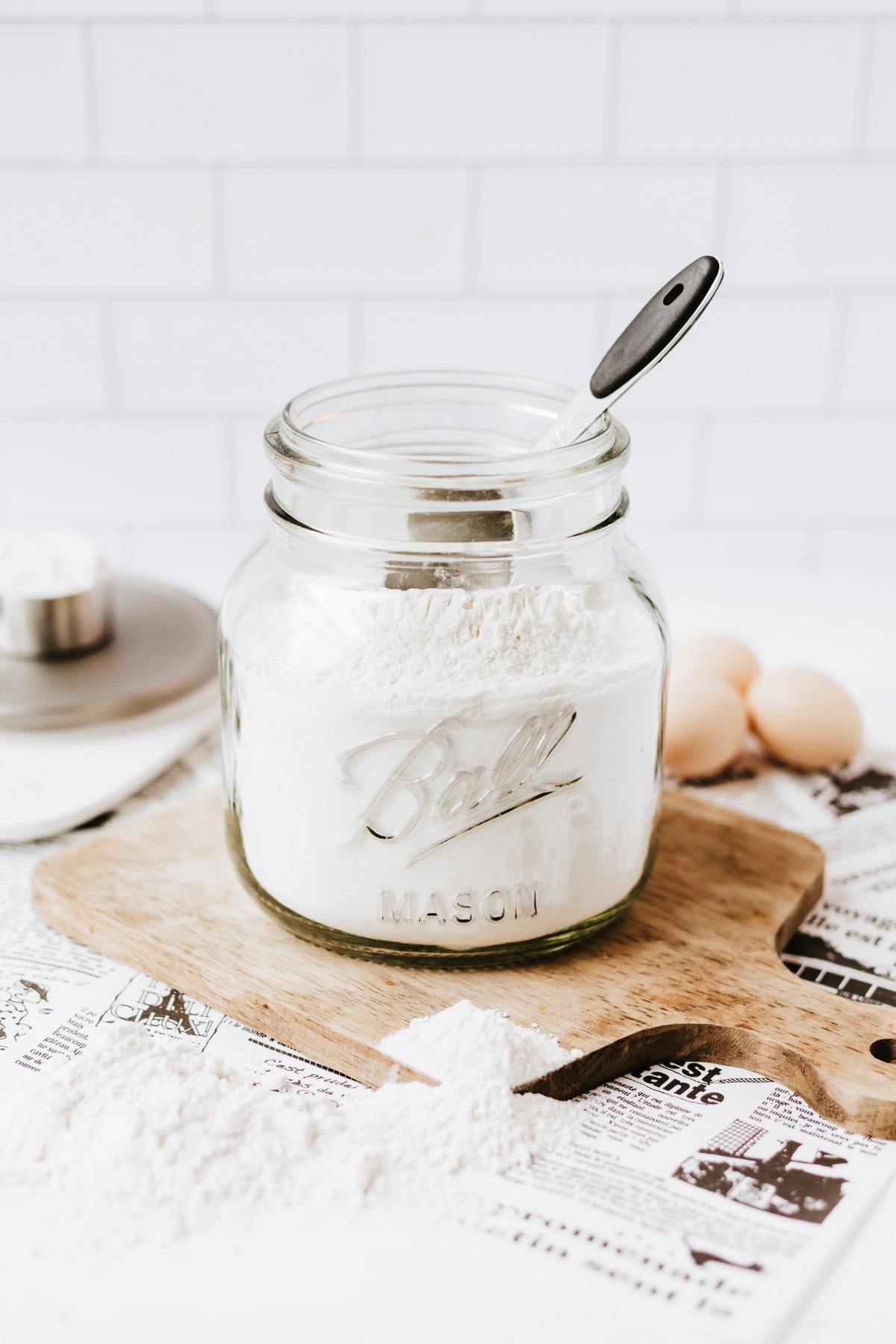
Ever wondered why your cookies turned out dry or your cake didn’t rise properly? The culprit might be how you’re measuring your flour. Knowing how to measure flour correctly can make or break your baking projects, especially when it comes to recipes that require precise amounts of dry ingredients.
Save This Post!
Most home bakers don’t realize that a cup of flour can vary by as much as 30% depending on your measuring method. That’s a big difference that affects everything from the texture of your chocolate chip cookies to the rise of your homemade bread.
Why Measuring Flour Correctly Matters
- Recipe Success: The right amount of flour ensures your baked goods have the perfect texture. Too much flour makes cookies dry and cakes dense, while too little can cause spreading or collapse.
- Consistent Results: When you measure correctly, you can recreate successful recipes time after time without surprises or disappointments.
- Proper Hydration: Flour-to-liquid ratios are crucial in baking. Accurate measurement helps maintain the proper balance for optimal gluten development.
- Texture Control: Whether you want chewy cookies or fluffy bread, the amount of flour directly impacts the final texture of your baked goods.
The Spoon and Level Method
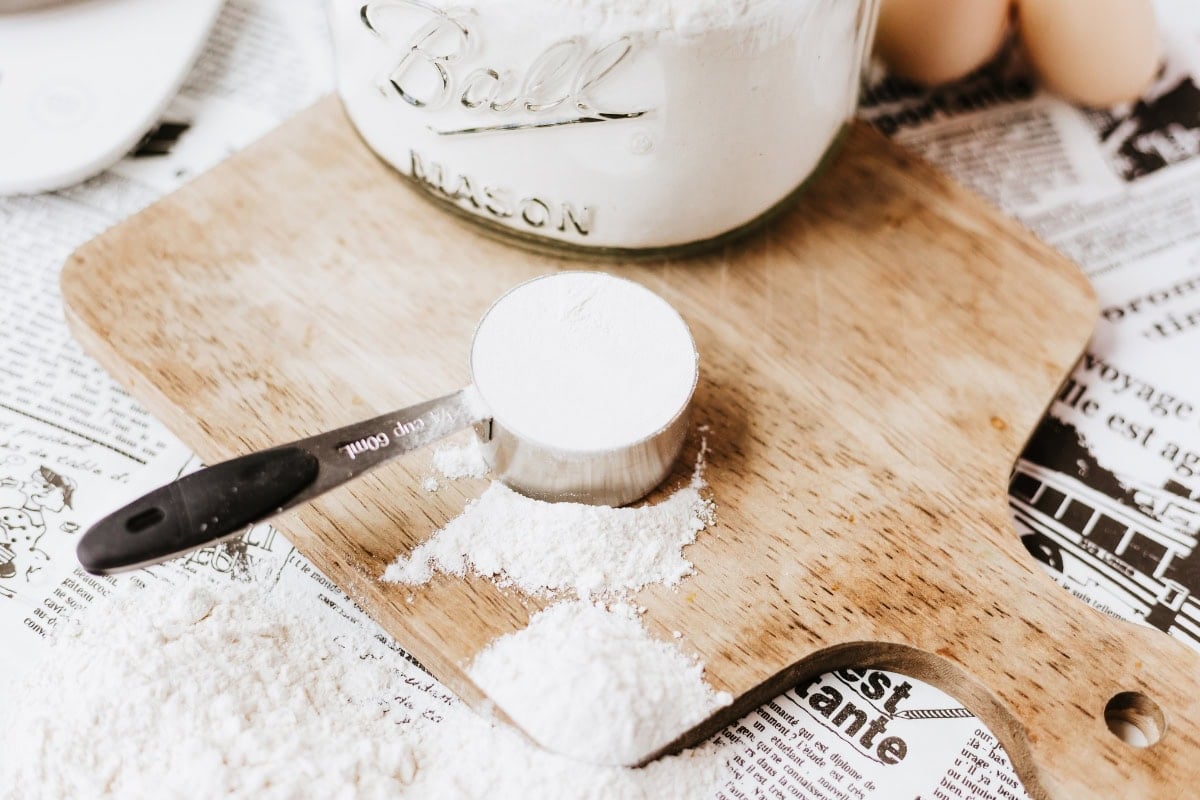
The spoon and level method is the most commonly recommended technique for measuring flour when using cup measurements. This method prevents the flour from becoming compacted, which happens when you scoop directly from the bag or bin.
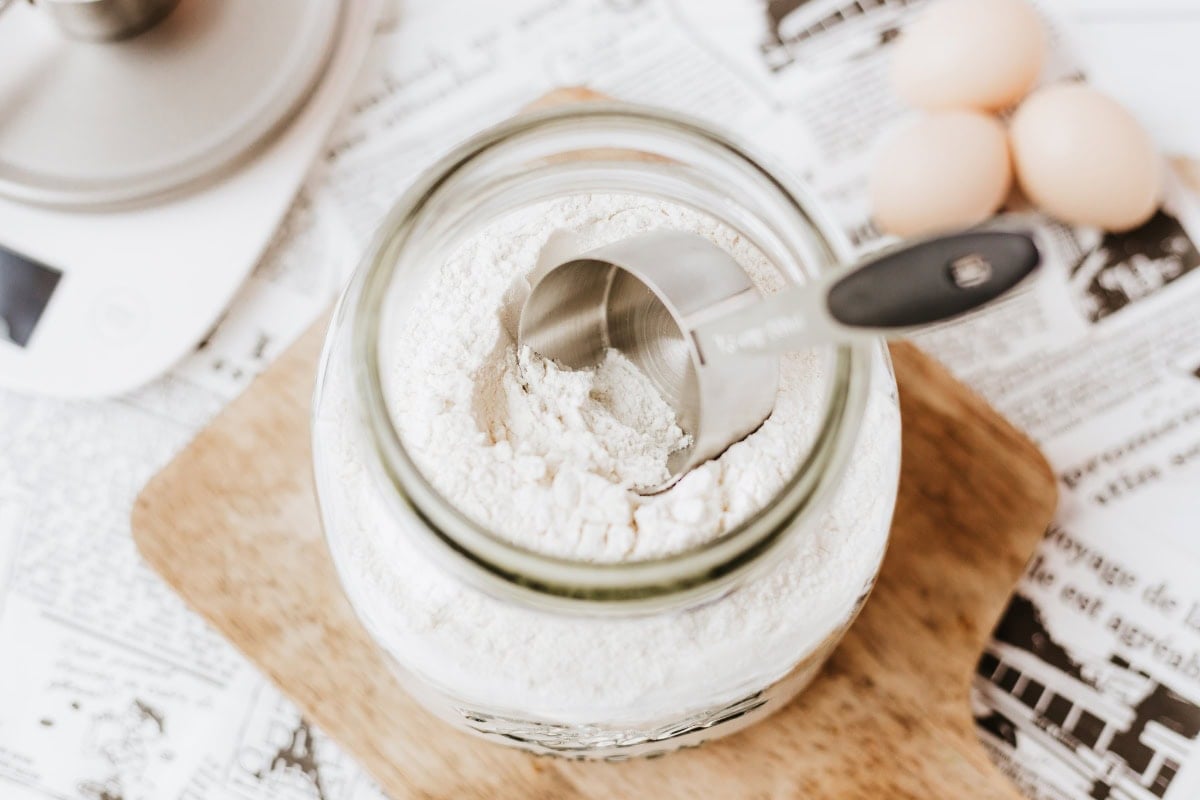
First, fluff up your flour by stirring it with a spoon to aerate it. Then, gently spoon the flour into your measuring cup until it’s overflowing. Finally, level off the top with the straight edge of a knife or spatula. This method typically yields about 120-125 grams of all-purpose flour per cup.
The Scoop and Sweep Method
Some recipes, especially older recipes and those from certain cookbook authors, assume you’ll use the scoop and sweep method. With this approach, you dip your measuring cup directly into the flour bin, fill it, and then level it off.
While convenient, this method often packs more flour into the cup, resulting in about 140-150 grams per cup. If your breads are coming out too dry or dense, you might be using this method when the recipe developer used the spoon and level technique.
Weighing: The Most Accurate Way
For the most consistent results, consider using a digital kitchen scale. Weighing ingredients eliminates the variables that affect volume measurements. Most professional bakers and recipe developers rely on weight rather than volume.
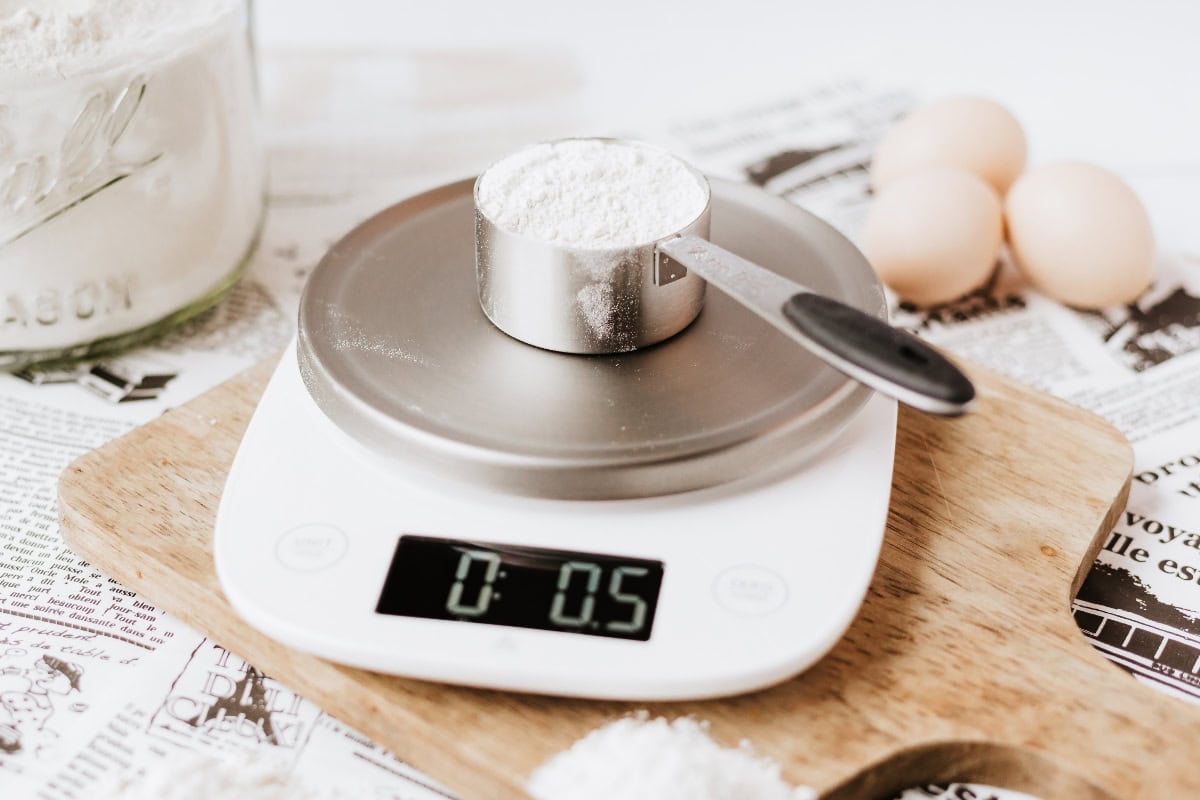
A cup of all-purpose flour typically weighs 120-125 grams or 4.25-4.5 ounces. However, different brands and types of flour have different weights:
- All-purpose flour: 120-125g per cup
- Bread flour: 130g per cup
- Cake flour: 110g per cup
- Whole wheat flour: 130g per cup
When making my air fryer pizza, I always use the scale method for perfect results every time.

Flour Measuring Tips
- Use the Right Tools: Invest in a set of dry measuring cups specifically designed for ingredients like flour and sugar.
- Don’t Shake or Tap: Never shake or tap the measuring cup to level flour, as this compacts it and gives you more flour than needed.
- Be Consistent: Whatever method you choose, stick with it for all your baking to maintain consistency.
- Check the Recipe: Look for clues about how the recipe developer measured. If weights are provided, that’s always the best option.
- Consider Humidity: Flour absorbs moisture from the air, so on humid days, you might need slightly less than usual.
Storing Tips
- Storage: Keep flour in an airtight container to prevent moisture absorption and pest infestation.
- Shelf Life: All-purpose flour stays fresh for about 6-8 months at room temperature or up to 1 year in the refrigerator.
- Specialty Flours: Whole grain flours contain more oils and can go rancid faster. Store them in the refrigerator for up to 6 months.
- Signs of Spoilage: Discard flour that has an off smell, discoloration, or signs of pests.
Converting Between Volume and Weight
If you’re working with American recipes that list cup measurements, having a conversion chart handy can be helpful. Here are some common conversions:
1 cup all-purpose flour = 120-125g 1 cup brown sugar (packed) = 220g 1 cup granulated sugar = 200g 1 cup cake flour = 110g
When baking my pumpkin banana bread, I’ve found that carefully measuring the flour makes all the difference between a dense loaf and a perfectly moist one.

FAQs
If your no butter chocolate chip cookies are inconsistent, flour measurement might be the culprit. Too much flour results in dry, cakey cookies, while too little creates flat, spread-out cookies. Try measuring your flour by weight for the most consistent results.
Unless a recipe specifically calls for “sifted flour,” you don’t need to sift before measuring. However, if the recipe calls for “1 cup sifted flour,” you should sift first, then measure. For “1 cup flour, sifted,” measure first, then sift.
Volume measurements (cups, tablespoons) are affected by how densely packed ingredients are, making them less precise. Weight measurements (grams, ounces) measure the actual mass of ingredients regardless of how they’re packed, ensuring consistency.
While technically possible, it’s not recommended. Dry measuring cups are designed to be filled to the top and leveled, while liquid measuring cups have extra space to prevent spills and include a pour spout. For best results with my sweet cornbread recipe, use the proper tools for each.
Yes! Different types of flour have different densities. Cake flour is lighter than all-purpose flour, while bread flour is slightly heavier. When precision matters, like when using my cake pan conversion chart, measuring by weight is even more important.
Try out your favorite measuring method with these delicious recipes!
