
Easy Blender Hollandaise Sauce Recipe


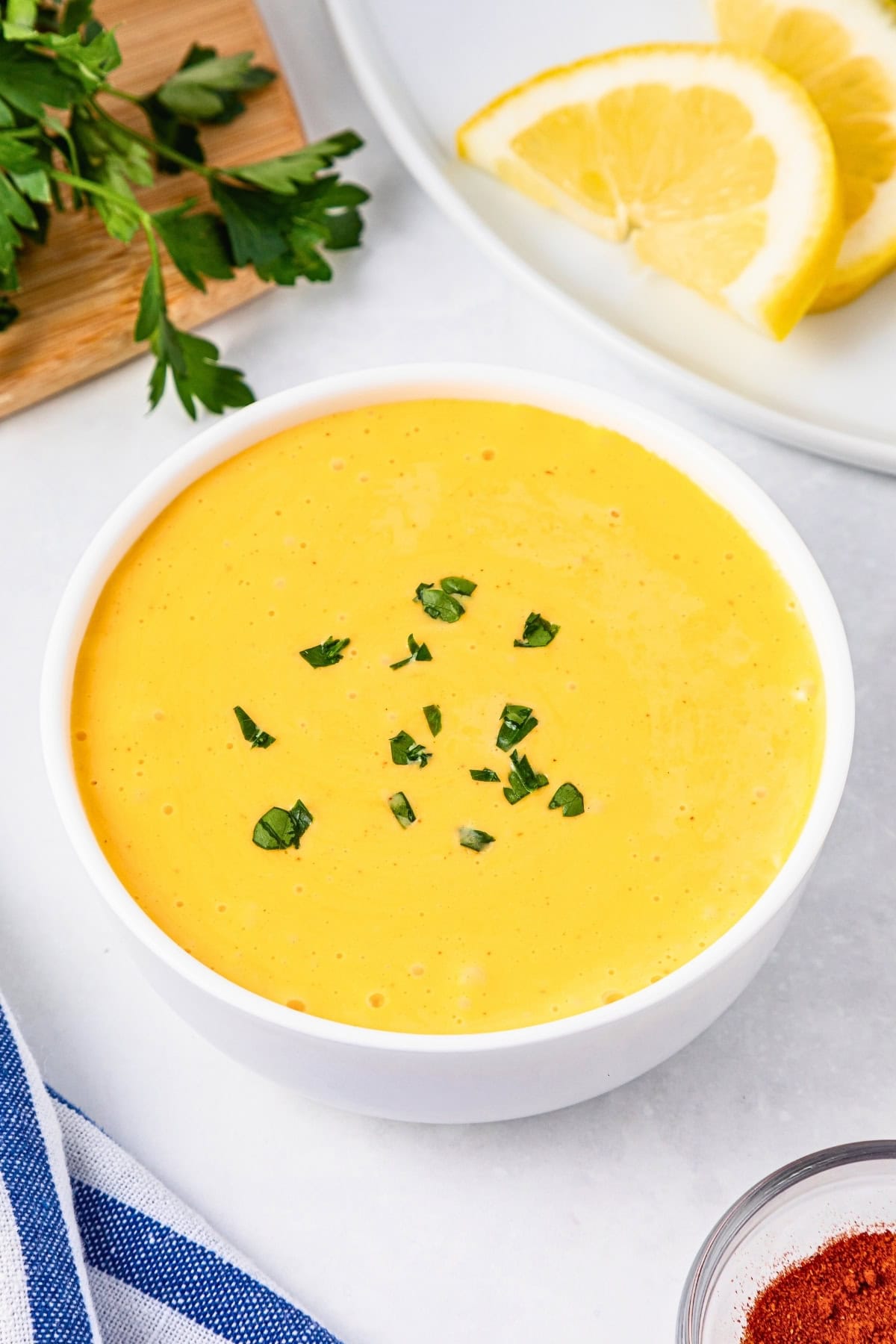
This blender hollandaise sauce transforms a traditionally finicky sauce into a foolproof 5-minute recipe anyone can master. Using your blender to emulsify the egg yolks and hot butter creates a silky smooth, lemony sauce that’s ready in just minutes.
Save This Post!
The hollandaise sauce recipe is easy to follow and delivers consistent results every time. No more whisking until your arm feels like it might fall off! This blender method produces a rich, creamy hollandaise that’s perfect for drizzling over eggs Benedict, steamed vegetables, or any dish that needs a touch of elegant flavor.
Looking for ways to use this delicious sauce? Try it with my Smoked Salmon Eggs Benedict, serve it over Air Fryer Roasted Potatoes, or drizzle it on Green Beans Almondine for an elevated side dish!
Reasons You’ll Love This Recipe
- Ultra-fast preparation: This blender hollandaise sauce takes just 5 minutes from start to finish, making it perfect for busy mornings or quick meals.
- Foolproof technique: The blender does all the hard work of emulsifying, creating a smooth sauce every time without the risk of breaking or curdling.
- Restaurant-quality results: Achieve the same rich, buttery, and silky texture you’d expect from a fine dining establishment right in your own kitchen.
- Versatile condiment: Beyond breakfast, this sauce elevates vegetables, fish, and many other dishes with its luxurious flavor and texture.

What is Hollandaise Sauce?
Hollandaise sauce is one of the five mother sauces in French cuisine, known for its rich, buttery flavor with a hint of lemon. Traditionally, this classic sauce is made by slowly whisking melted butter into egg yolks over gentle heat, which can be challenging even for experienced cooks.
The blender method revolutionizes this process by using the power of mechanical blending to achieve the perfect emulsion of egg yolks and butter. The result is a velvety smooth sauce with the same luxurious taste as the traditional version but with much less effort. Hollandaise is most famous as the crowning touch on Eggs Benedict, but its uses extend far beyond breakfast to vegetables, fish, and many other dishes.
Blender Hollandaise Sauce Ingredients
See the recipe card below for the full list of ingredients and exact measurements.
- Butter – Use high-quality salted butter for the best flavor. The butter needs to be melted and hot to properly emulsify with the egg yolks. This creates the rich, creamy base of your hollandaise sauce.
- Egg yolks – The key binding ingredient that gives hollandaise its signature texture and color. Fresh eggs work best, and separating them while cold makes the process easier.
- Fresh lemon juice – Adds brightness and acidity to balance the richness of the butter. Fresh-squeezed lemon juice provides the most vibrant flavor compared to bottled versions.
- Cayenne pepper or smoked paprika – Just a pinch adds subtle heat and complexity to the sauce. You can adjust the amount based on your preference for spice.
- Salt – Enhances all the flavors in the sauce. If using unsalted butter, you’ll want to add a bit more salt to taste.

Substitutions and Additions
- Citrus options – Substitute lime juice or white wine vinegar for a different flavor profile if lemon isn’t available.
- Herb infusions – Add fresh herbs like dill, tarragon, or chives to create variations on the classic sauce. Simply blend them in at the end for a few seconds.
- Spice alternatives – White pepper provides heat without visible specks, or try a dash of hot sauce instead of cayenne for a different kind of kick.
- Dairy alternatives – For a lighter version, you can use half olive oil and half butter, though the texture and flavor will be slightly different.
- Make it a béarnaise – Add a tablespoon of finely minced tarragon and reduce the lemon juice by half to transform this into a simple béarnaise sauce.
How to Make Blender Hollandaise Sauce (step-by-step directions)

STEP 1. In a small saucepan over low heat, melt the butter until it’s completely liquefied and just beginning to bubble. You want the butter hot but not browned or burned. (Photo 1)
STEP 2. While the butter is melting, place the egg yolks, lemon juice, and cayenne pepper or smoked paprika in your blender jar. (Photo 2)
STEP 3. Blend these ingredients on high speed for about 1 minute until the mixture becomes lighter in color and slightly frothy. (Photo 3)

STEP 4. With the blender running on low speed, remove the center cap from the lid (or open the lid plug).
STEP 5. Very slowly drizzle the hot melted butter into the running blender in a thin, steady stream. This gradual addition is crucial for proper emulsification. (Photo 4)
STEP 6. Continue blending for another 30 seconds after all the butter has been added to ensure the sauce is smooth and well-incorporated. (Photo 5)
STEP 7. Taste the sauce and adjust seasonings as needed. If you want more lemon flavor, add an extra teaspoon of juice and blend briefly again.
STEP 8. Transfer to a serving container and use immediately for the best texture and flavor. (Photo 6)

Recipe Tips
- Warm your blender jar by rinsing it with hot water before adding the ingredients. This helps maintain the temperature of the sauce during blending.
- Blend the egg yolks thoroughly before adding butter to incorporate air, which creates a lighter, less dense sauce.
- The butter temperature matters – it should be hot enough to slightly cook the egg yolks but not so hot that it scrambles them. Look for it to just begin bubbling.
- Pour the butter extremely slowly at first, then you can increase the speed slightly as the emulsion forms.
- If your sauce is too thick, add a teaspoon of warm water or additional lemon juice to thin it to your desired consistency.
- Keep everything warm during the process for the smoothest sauce. Cold eggs or a cold blender can cause the sauce to thicken too much.
Storing Tips
- Storage: Hollandaise sauce is best enjoyed fresh and warm, immediately after preparation. However, leftovers can be stored in an airtight container in the refrigerator for 3-4 days.
- Refrigerator: When refrigerated, hollandaise will solidify. To reheat, place the container in warm (not hot) water and stir occasionally until it reaches room temperature.
- Reheating: Gently warm the sauce in a heatproof bowl over simmering water (double-boiler method), whisking constantly. Never microwave or apply direct heat, as this will cause the sauce to break.
- Freezing: Not recommended, as the emulsion will separate when thawed, resulting in a grainy texture.
Serving Suggestions
This easy blender hollandaise sauce pairs wonderfully with Baked Chicken Parmesan for a unique twist on a classic dish. It’s also delicious drizzled over Rosemary Lemon Boneless Chicken Thighs or Baked Halibut Recipe with Lemon and Dill Topping.
For a vegetarian option, try it with Roasted Brussels Sprouts with Balsamic Glaze or Broccoli Cheese Twice Baked Potatoes for an indulgent side dish.

Recipe FAQs
This usually happens if the butter was added too quickly or was too hot. To fix a broken sauce, add a tablespoon of hot water to a clean blender, then slowly add the broken sauce while blending. This should help re-emulsify the ingredients.
While best served fresh, you can make it up to 1 hour ahead and keep it warm in a thermos or in a covered container placed over a bowl of warm (not hot) water. Stir before serving.
A properly emulsified sauce will be smooth, pale yellow, and have a consistency similar to thin mayonnaise. It should coat the back of a spoon and leave a clean line when you run your finger through it.
Yes! An immersion blender works wonderfully for hollandaise. Place all ingredients except the butter in a tall container, blend briefly, then slowly drizzle in the hot butter while continuing to blend.
The hot butter partially cooks the egg yolks, but there is still some risk. Use the freshest eggs possible and consider using pasteurized eggs if serving to pregnant women, young children, elderly, or immunocompromised individuals.
Need More Sauce Recipes? Try These:

Easy Blender Hollandaise Sauce Recipe
Ingredients
- ½ cup 1 stick salted butter
- 3 egg yolks
- 2 teaspoons fresh lemon juice
- ⅛ teaspoon cayenne pepper or smoked paprika
Instructions
- In a small saucepan over low heat, melt the butter until it’s completely liquefied and just beginning to bubble. You want the butter hot but not browned or burned.
- While the butter is melting, place the egg yolks, lemon juice, and cayenne pepper or smoked paprika in your blender jar.
- Blend these ingredients on high speed for about 1 minute until the mixture becomes lighter in color and slightly frothy.
- With the blender running on low speed, remove the center cap from the lid (or open the lid plug).
- Very slowly drizzle the hot melted butter into the running blender in a thin, steady stream. This gradual addition is crucial for proper emulsification.
- Continue blending for another 30 seconds after all the butter has been added to ensure the sauce is smooth and well-incorporated.
- Taste the sauce and adjust seasonings as needed. If you want more lemon flavor, add an extra teaspoon of juice and blend briefly again.
- Transfer to a serving container and use immediately for the best texture and flavor.
Notes
- Warm your blender jar by rinsing it with hot water before adding the ingredients. This helps maintain the temperature of the sauce during blending.
- Blend the egg yolks thoroughly before adding butter to incorporate air, which creates a lighter, less dense sauce.
- The butter temperature matters – it should be hot enough to slightly cook the egg yolks but not so hot that it scrambles them. Look for it to just begin bubbling.
- Pour the butter extremely slowly at first, then you can increase the speed slightly as the emulsion forms.
- If your sauce is too thick, add a teaspoon of warm water or additional lemon juice to thin it to your desired consistency.
- Keep everything warm during the process for the smoothest sauce. Cold eggs or a cold blender can cause the sauce to thicken too much.
Nutrition Information
Hungry for more?
Follow me on Pinterest and make sure to comment below!
