
How to Organize a Spice Cabinet: Complete Guide for a Functional Kitchen

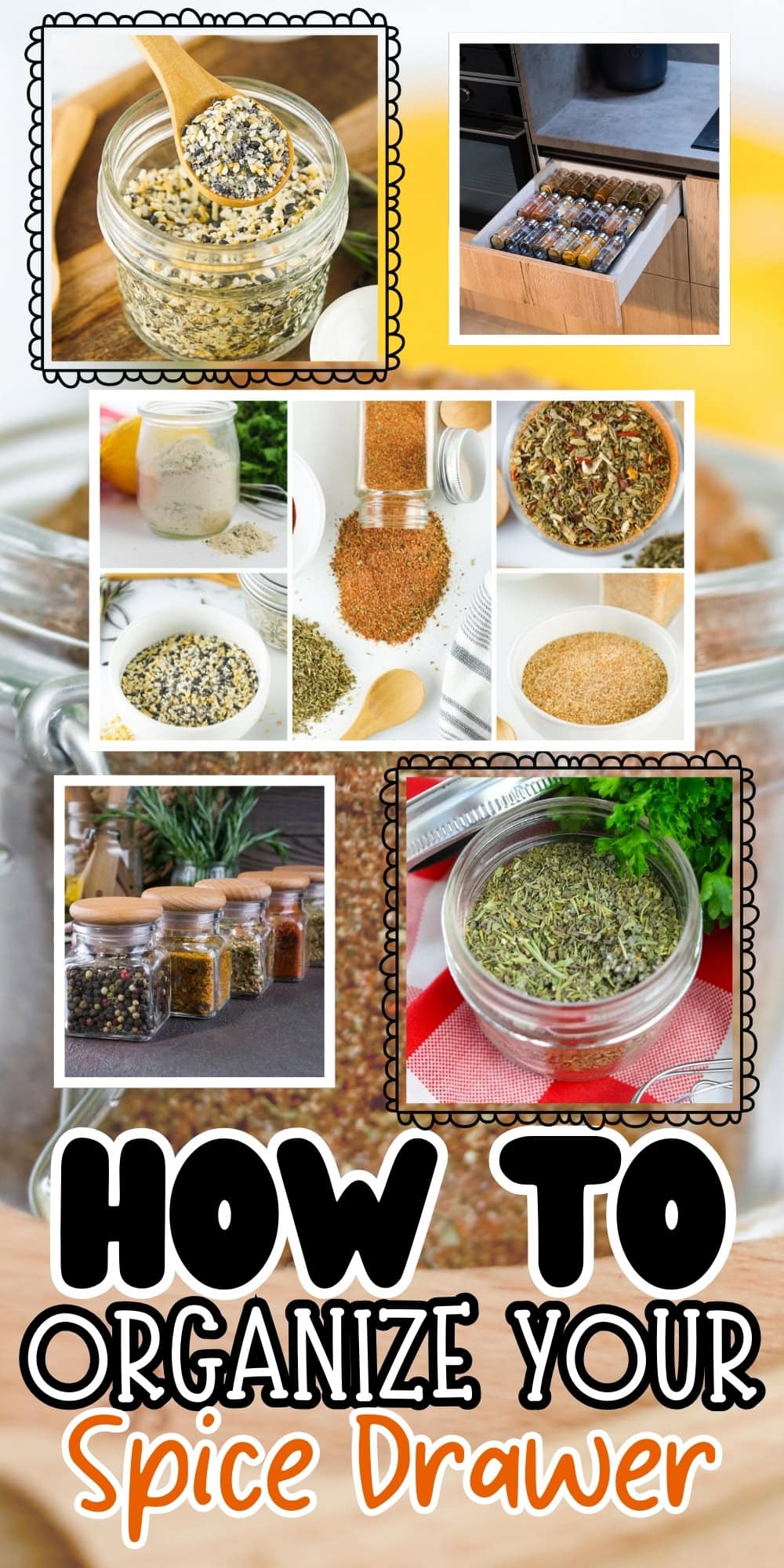
Learning how to organize a spice cabinet can transform your entire cooking experience. Picture this: you’re in the middle of preparing dinner when a recipe calls for paprika, but instead of finding it instantly, you face an avalanche of mismatched containers, expired seasonings, and that elusive paprika hiding somewhere behind three bottles of garlic powder.
Save This Post!
The good news is that creating an organized spice cabinet doesn’t have to be overwhelming. With the right system in place, you’ll save time, money, and frustration while making your cooking more enjoyable and efficient. This guide will walk you through every step of creating a perfectly organized spice cabinet that actually works for your cooking style.
Why Spice Cabinet Organization Matters
A well-organized spice cabinet transforms your entire cooking experience. When you can quickly locate any spice or herb you need, meal preparation becomes smoother and more enjoyable. You’ll spend less time searching and more time creating delicious meals.
The benefits of an organized spice cabinet include:
- Time savings – No more emptying half your cabinet to find one ingredient
- Cost savings – Avoid purchasing duplicates when you can see your entire inventory
- Better cooking results – Fresh, easily accessible spices improve flavor
- Reduced food waste – Use seasonings before they expire
- Increased creativity – Visible options encourage experimentation with new flavors
An organized spice cabinet also improves your cooking results. When you can easily see all your options, you’re more likely to experiment with new flavors and seasoning blends. This accessibility encourages culinary creativity and helps you make the most of your spice collection.
Step 1: Empty and Clean Your Cabinet
Start with a completely clean slate by removing every single item from your spice storage area. This might seem overwhelming at first, but it’s essential for creating an effective organization system.
Clear everything out and place all spices, herbs, and seasonings on your counter or kitchen table. This gives you a complete picture of what you’re working with and helps you identify duplicates or items you’ve forgotten about.
Clean thoroughly by wiping down all shelves, drawers, or cabinet surfaces with a damp cloth. Pay attention to any spice residue or sticky spots that may have accumulated over time. If you have adjustable shelves, consider repositioning them to better accommodate your collection.
Step 2: Sort and Purge Your Collection
Now comes the sorting phase, which is where you’ll make important decisions about what stays and what goes. Create three piles: keep, toss, and replace.
Check expiration dates on every container. Ground spices typically last 2-3 years, while whole spices can maintain their potency for 3-4 years. Common cooking herbs and spices lose their flavor over time, so don’t hesitate to discard anything that’s lost its aroma or color.
Test questionable items by giving them a smell test. Fresh spices should have a strong, distinct aroma. If you can barely detect any scent, it’s time to replace that item. This is also a good time to consolidate duplicates and check for any containers that are nearly empty.
Group similar items together during this process. You might discover you have multiple bottles of Italian seasoning or realize you’re well-stocked on baking spices but lacking in savory herbs.

Step 3: Choose Your Organization System
The key to a successful spice organization system is choosing a method that matches your cooking style and habits. Here are the most effective approaches:
Popular Organization Methods:
- Alphabetical organization – Logical and easy to maintain, perfect for large collections
- Cuisine-based grouping – Keep Mexican ingredients together, Italian herbs in another section
- Frequency-based placement – Most-used items at eye level (everything bagel seasoning, garlic powder)
- Type-based sorting – Separate whole spices from ground, baking spices from savory seasonings
Alphabetical organization works well if you know exactly what spice you’re looking for. This system is logical and easy to maintain, making it simple for other family members to find and return items to their proper places.
Organization by cuisine type groups spices according to cooking styles. This method works well if you tend to cook specific types of cuisine regularly and want related ingredients easily accessible.
Frequency-based organization places your most-used spices at eye level and within easy reach. Items like salt, pepper, and your favorite homemade seasoning blends earn prime real estate, while specialty spices used occasionally can be stored higher or lower.
Step 4: Select Storage Solutions
Your storage containers and organizational tools can make or break your system’s long-term success. Consider both functionality and visibility when making these choices.
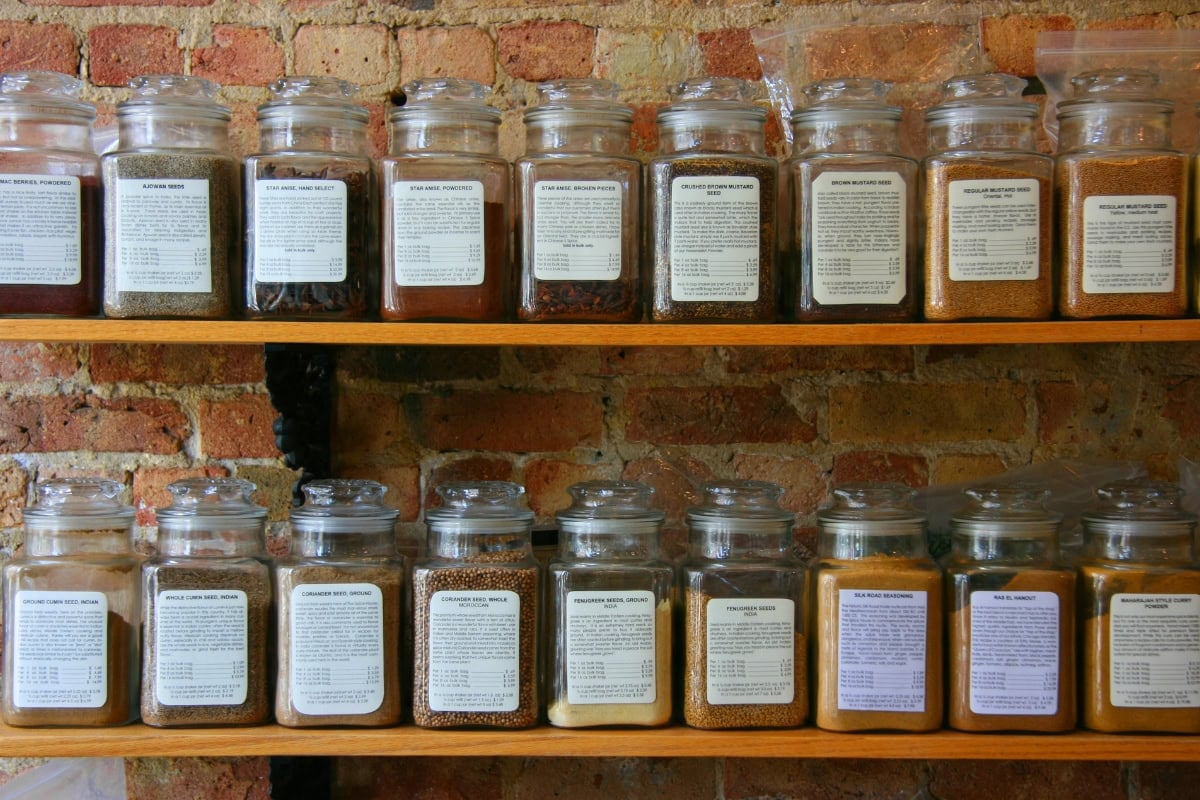
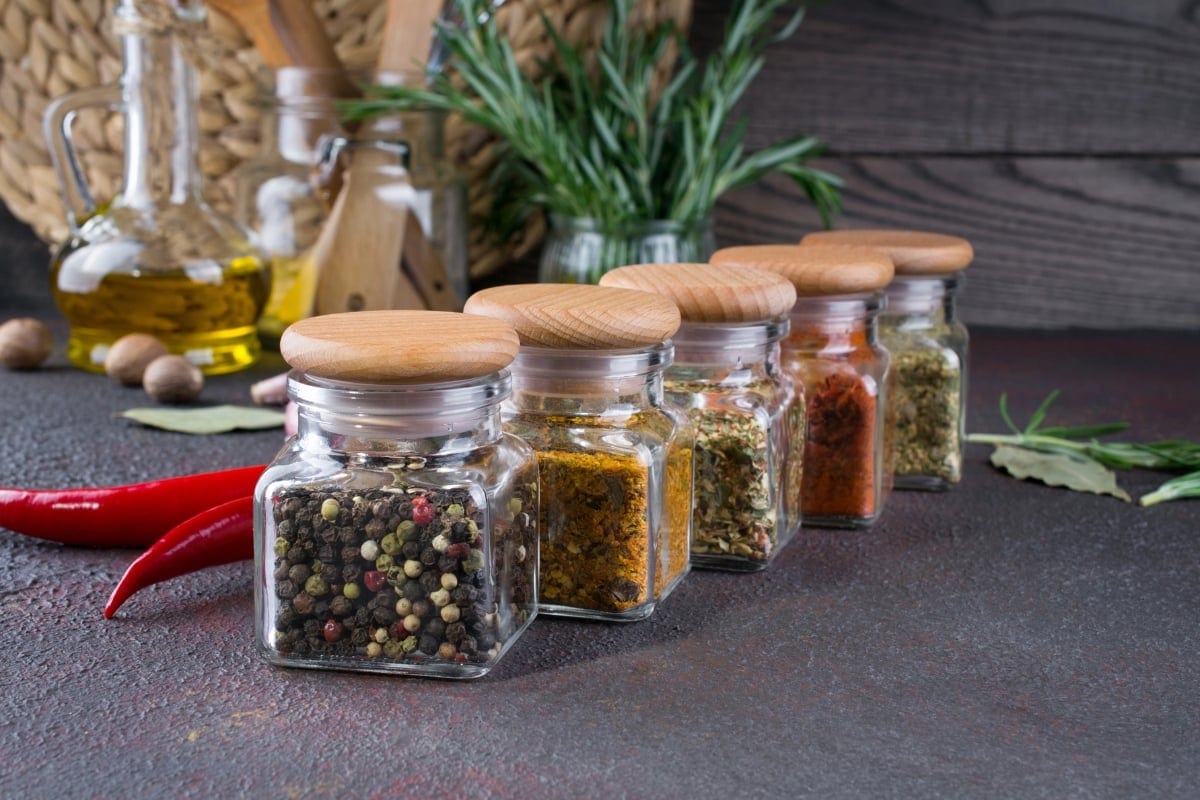
Uniform containers create a clean, cohesive look while maximizing space efficiency. Glass jars or clear plastic containers allow you to see contents at a glance and stack neatly. However, keeping spices in their original containers can be perfectly functional if they’re similar sizes and you add clear labels.
Clear labeling is non-negotiable regardless of your container choice. Include both the spice name and the date you purchased or opened it. This helps with rotation and ensures you’re using the freshest ingredients possible.
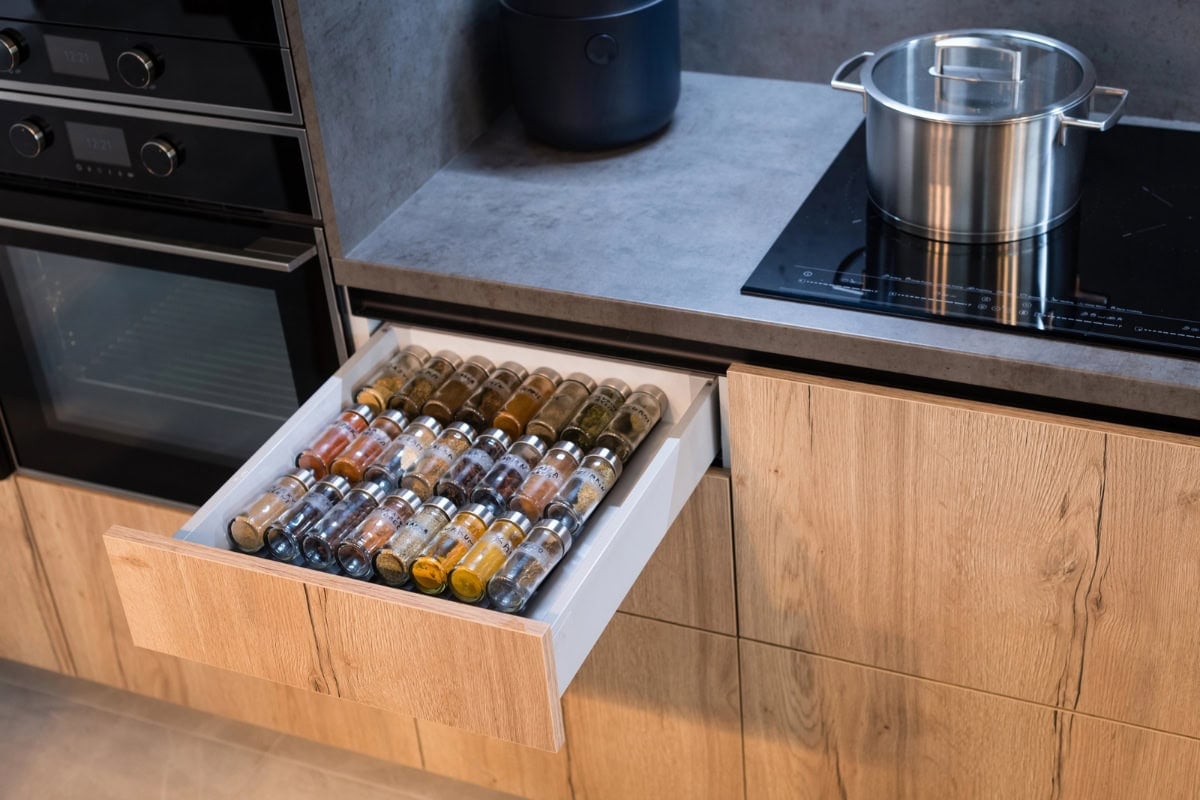
Storage accessories like shelf risers, lazy Susans, or drawer inserts can dramatically improve accessibility. Tiered shelving allows you to see items in the back, while rotating platforms work well in corner cabinets or deep spaces.
Consider the storage environment when choosing containers. Spices should be protected from light, heat, and moisture. If your cabinet is near the stove or receives direct sunlight, invest in opaque containers or relocate your spice storage to a cooler, darker area.
Step 5: Arrange for Maximum Efficiency
The placement of your organized spices can significantly impact how functional your system becomes in daily use. Think about workflow and accessibility as you arrange everything.
Eye-level placement should be reserved for your most frequently used items. These are the spices you reach for multiple times per week, such as salt, pepper, garlic powder, and any homemade seasoning blends you use regularly.
Group related items even within your chosen organization system. For example, if you’re organizing alphabetically, consider keeping all your “P” spices together but arranging them by frequency of use within that grouping.
Leave room for growth by not packing your cabinet completely full. This allows for easy access and provides space for new additions to your collection. A cramped cabinet becomes difficult to maintain and defeats the purpose of organization.
Consider cooking workflow when placing items. Baking spices might work well together in one area, while everyday cooking seasonings deserve prime placement near your stove or main prep area.
Best Practices for Spice Storage
Proper storage extends the life of your spices and maintains their potency longer. Understanding how to store different types of seasonings helps preserve both flavor and your investment.
Essential Storage Guidelines:
- Keep spices cool and dry – Store away from heat sources like stoves and ovens
- Protect from light – Use dark cabinets or opaque containers
- Ensure tight seals – Prevent moisture and air exposure
- Avoid humid areas – Don’t store above dishwashers or in steamy locations
- Label with dates – Track purchase dates for rotation
Temperature control is crucial for maintaining spice quality. Heat breaks down the essential oils that give spices their flavor and aroma, so choose storage locations wisely.
Moisture protection prevents clumping and mold growth. In humid climates, consider adding silica gel packets to containers with ground spices for extra protection.
For comprehensive guidance on maintaining spice quality, check out our detailed guide on seasonings storage for specific tips on extending the life of your herbs and spices.
Maintenance Tips for Long-Term Success
Creating an organized system is only half the battle. Maintaining that organization ensures your effort pays off long-term and keeps your spice cabinet functional.
Regular inventory checks help you stay on top of expiration dates and running low on frequently used items. Aim to review your collection every three to six months, noting what needs replacing and what you might want to add.
Quarterly deep cleaning maintains both organization and hygiene. Remove everything, wipe down surfaces, and reorganize as needed. This is also a good time to evaluate whether your current system is working or needs adjustments.
Shopping with your system in mind prevents impulse purchases that don’t fit your organization method. Keep a running list of what you need to replace, and resist buying new spices unless you have a specific use in mind.
Involve family members in maintaining the system by clearly labeling everything and explaining your organization method. When everyone knows where things belong, the system stays organized longer.
Free Spice List Download: Your Kitchen Reference
To help you master spice organization and usage, I’ve created a comprehensive alphabetical spice list that serves as the perfect kitchen reference. This free download includes detailed flavor profiles and best uses for dozens of common spices and herbs.
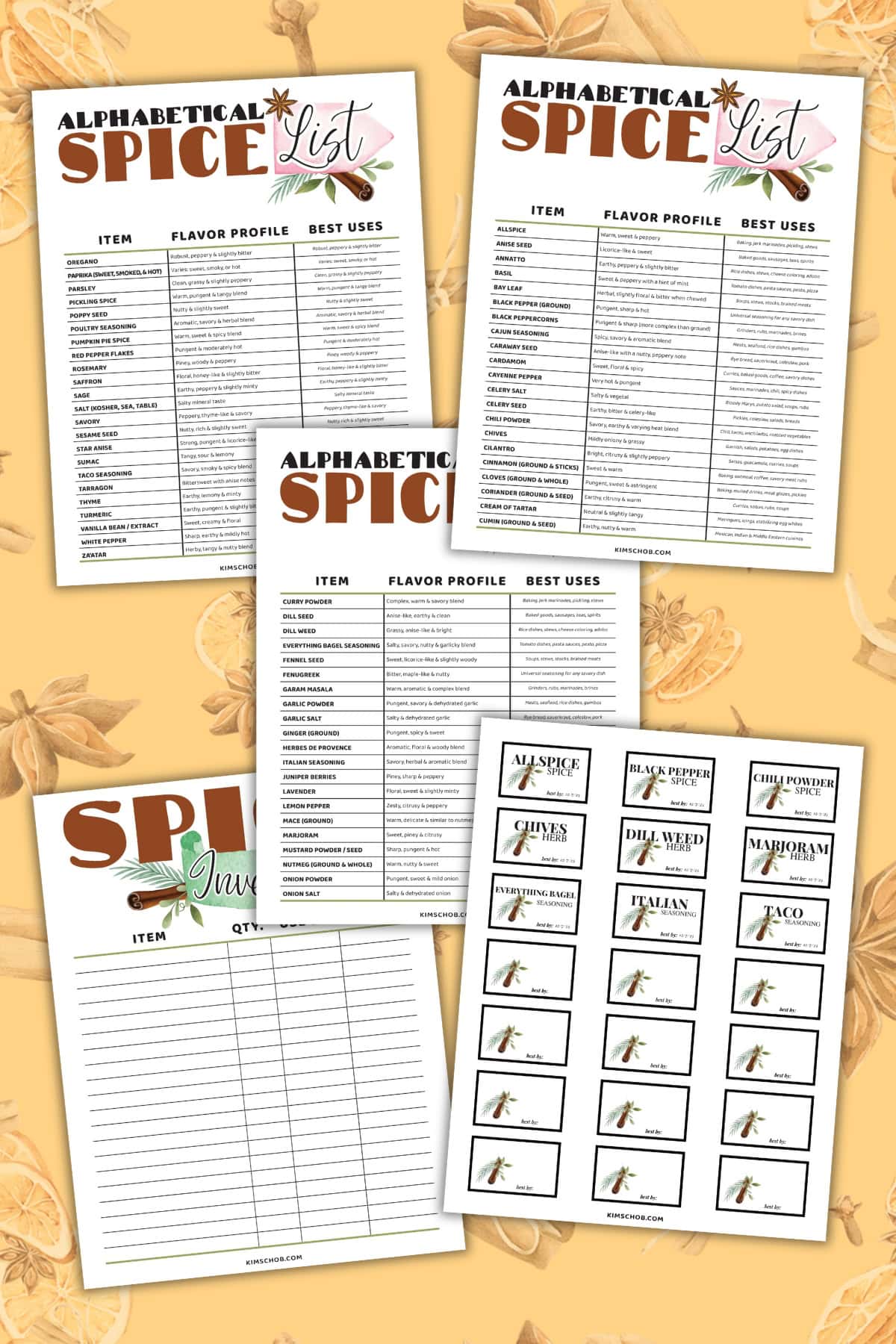
The printable guide features everything from allspice to za’atar, with descriptions that help you understand when and how to use each ingredient. You’ll also find the best applications for each spice, whether it’s perfect for baking, marinades, or specific cuisines.
Also included is a handy spice inventory tracker that helps you keep tabs on what you have, when you bought it, and when it might need replacing. This tool makes grocery shopping more efficient and helps prevent duplicate purchases.
Grab your free download to get your free spice list and start building a more organized, functional spice cabinet today. Print it out and keep it handy for quick reference while cooking or shopping.
Common Mistakes to Avoid
Learning from common organizational mistakes can save you time and frustration as you set up your system.
Top Organization Pitfalls:
- Storing spices above the stove – Heat and steam degrade quality quickly
- Keeping expired spices – Old seasonings won’t enhance your food’s flavor
- Over-organizing – Complicated systems are hard to maintain
- Ignoring your cooking style – Choose methods that match how you actually cook
- Poor labeling – Unlabeled containers create confusion and waste time
Heat exposure is one of the biggest threats to spice quality. If your only storage option is above the stove, consider moving your most frequently used items to a different location.
Holding onto questionable spices because they “still look fine” compromises your cooking results. When in doubt, replace items that have lost their aroma or color.
Choose organization methods that feel natural and sustainable for your cooking habits rather than the most aesthetically pleasing option that might be too complicated to maintain long-term.
Taking Your Spice Game to the Next Level
Once you have an organized cabinet, you might discover a newfound interest in experimenting with different flavors. Consider trying your hand at making homemade seasoning blends to customize flavors exactly to your taste preferences.
Building a collection of signature blends can simplify cooking while adding unique touches to your meals. Start with basic combinations and gradually experiment with more complex flavor profiles as you become comfortable with different spice combinations.
Seasonal organization might become relevant as your collection grows. Some cooks find it helpful to rotate seasonal baking spices to the front during fall and winter, while keeping grilling seasonings easily accessible during warmer months.
An organized spice cabinet opens up possibilities for more adventurous cooking. When you can easily see all your options, you’re more likely to try new combinations and develop your own signature flavors.
Your newly organized spice cabinet will transform your cooking experience from frustrating searches to effortless seasoning. The time you invest in setting up a proper system pays dividends every time you cook, making meal preparation more enjoyable and efficient.
Remember to download your free spice list to maximize the benefits of your organized cabinet. With proper organization, quality storage, and regular maintenance, you’ll have a functional spice collection that enhances every meal you prepare. Start with one step at a time, and soon you’ll wonder how you ever cooked without this level of organization.
Need More Guides? Try these:
- Homemade Brown Sugar Recipe (2-Ingredient Easy Method)
- How to Store Herbs: Keep Fresh and Dried Herbs Flavorful Longer
- How to Crack Open a Coconut
