
How to Store Herbs: Keep Fresh and Dried Herbs Flavorful Longer


Nothing’s more frustrating than buying a bunch of fresh cilantro for tacos, only to find it turned into green slime three days later. Or reaching for that jar of oregano to discover it smells like cardboard instead of the aromatic herb that makes your Italian seasoning so flavorful.
Save This Post!
Proper herb storage can extend the life of fresh herbs from days to weeks and keep dried herbs potent for years instead of months. Whether you’re making herbs de Provence for a special dinner or need fresh basil for easy basil pesto, knowing how to store herbs correctly will save you money and elevate your cooking. The difference between properly stored herbs and forgotten ones can transform a simple dish into something restaurant-worthy.
Fresh Herb Storage Methods
Fresh herbs fall into two main categories that require different storage approaches. Understanding which method works for each type will dramatically extend their shelf life.
Tender Herbs: The Water Method
Tender herbs like cilantro, parsley, and dill have delicate stems that benefit from staying hydrated. Treat them like fresh flowers by trimming the stems and placing them in a glass of water. Cover the leaves loosely with a plastic bag and refrigerate. This method keeps herbs fresh for up to two weeks.
For cilantro that’s destined for fresh pico de gallo or parsley that’ll brighten up garlic butter shrimp, this water storage method maintains their vibrant color and crisp texture. Change the water every few days to prevent bacterial growth.

Hardy Herbs: The Paper Towel Method
Sturdy herbs like rosemary, thyme, and sage prefer a drier environment. Wrap them loosely in slightly damp paper towels, then place in a plastic bag with a few holes poked in it. Store in the refrigerator’s crisper drawer.
This method works perfectly for herbs you’ll use in rosemary lemon boneless chicken thighs or the thyme that makes creamy sweet mashed potatoes so aromatic. Hardy herbs stored this way stay fresh for 2-3 weeks.
Special Case: Basil Loves Room Temperature
Basil is the exception to refrigerator storage rules. Keep fresh basil on your counter in a glass of water, like a bouquet, away from direct sunlight. Refrigeration actually damages basil’s delicate leaves, causing them to turn black.
Counter-stored basil stays vibrant and flavorful for up to a week, perfect for baked chicken parmesan or easy caprese salad. Just remember to change the water every couple of days.

Freezing Fresh Herbs for Long-Term Storage
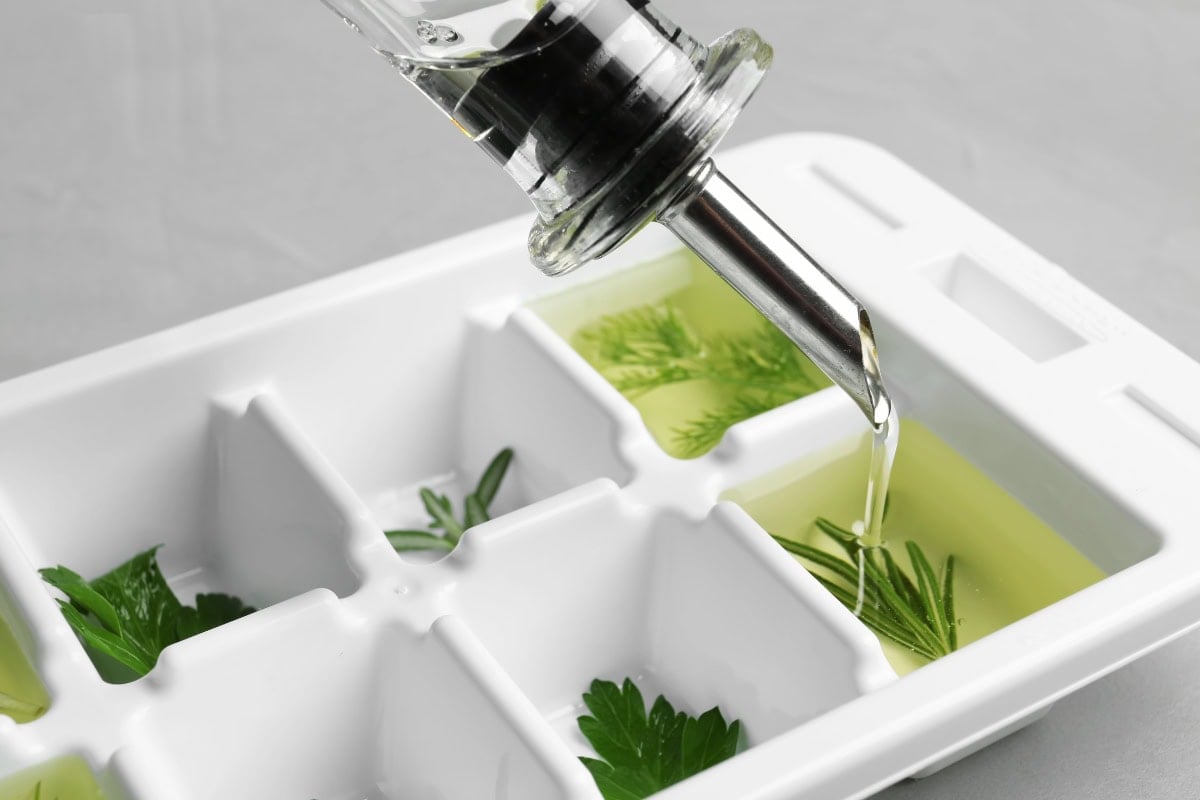
For herbs you won’t use immediately, freezing preserves their flavor for months. The ice cube tray method works best: chop herbs, place in ice cube trays, cover with olive oil or water, and freeze. Once solid, transfer cubes to freezer bags.
These frozen herb cubes are perfect for dishes like homemade marinara sauce where the herbs will be cooked. While the texture changes, the flavor remains strong. Herbs like oregano, thyme, and rosemary freeze particularly well.
Dried Herb Storage Essentials
Dried herbs require completely different storage conditions than fresh ones. The key is protecting them from their four biggest enemies: light, heat, air, and moisture.
Choose the Right Containers
Airtight glass jars or metal tins with tight-fitting lids work best for dried herb storage. Avoid plastic containers, which can absorb odors and allow air to seep in over time. Mason jars are perfect and cost-effective options that keep herbs fresh while letting you see what’s inside.
Store containers in a cool, dark pantry or cabinet away from the stove, oven, or any heat source. That spice rack above your stove might look convenient, but the heat and light will quickly rob your herbs of their potency. For comprehensive storage tips, check out our guide on seasonings storage.
Location Matters More Than You Think
The worst place for dried herbs is anywhere near your cooking area. Heat and light break down the essential oils that give herbs their flavor and aroma. A dark pantry shelf or closed cabinet maintains the cool, stable environment dried herbs need.
Properly stored dried herbs maintain their potency in blends like homemade taco seasoning and Mediterranean herb seasoning. When herbs lose their punch, these signature blends fall flat.

Know When to Replace Dried Herbs
Most dried herbs stay potent for 1-3 years when stored properly, but there are clear signs when it’s time to replace them. If the color has faded significantly, the aroma is weak when you rub the herbs between your fingers, or they taste dusty rather than flavorful, it’s time for fresh ones.
Test dried herbs by crushing a small amount between your palms and smelling them. Quality herbs should release a strong, pleasant aroma immediately. Weak-smelling herbs won’t contribute much flavor to your cajun seasoning or other spice blends.
Herb-Specific Storage Guide
Different herbs have unique storage needs based on their structure and moisture content. Here’s how to store the most common cooking herbs for maximum freshness.
- Basil requires room temperature storage in water, never refrigeration. Fresh basil is essential for penne alla vodka and loses its flavor quickly when stored incorrectly.
- Cilantro thrives with the water method in the refrigerator, staying fresh for up to two weeks. This storage method ensures your cilantro stays vibrant for fresh pico de gallo and Mexican dishes.
- Rosemary is hardy and stores well wrapped in damp paper towels in the refrigerator. Its robust nature makes it perfect for rosemary olive oil bread and long-cooking dishes.
- Thyme prefers the paper towel method in the refrigerator, maintaining its potency for weeks. Properly stored thyme elevates dishes like creamy sweet mashed potatoes.
- Parsley does best with the water method, keeping its bright flavor for garlic butter shrimp and as a fresh garnish.
Creative Storage Solutions
Beyond basic storage, there are several methods to preserve herbs for extended use while maintaining their flavor profiles.
Growing Your Own Fresh Supply
The ultimate herb storage solution is having a constant fresh supply. Consider creating a thriving herb garden for your kitchen window where you can snip herbs as needed. This eliminates storage concerns while ensuring maximum freshness.

Herb Butter for Flavor Preservation
Making herb butter extends the life of fresh herbs while creating a versatile cooking ingredient. Follow the technique from our compound garlic butter recipe, substituting your fresh herbs. Herb butter freezes beautifully for up to six months.
Ice Cube Preservation Method
Freeze chopped herbs in ice cube trays with olive oil or melted butter. These herb cubes add instant flavor to soups, sauces, and sautéed dishes. This method works particularly well for herbs you’ll use in cooked applications rather than fresh garnishes.
Making Your Own Dried Herbs
Air drying fresh herbs is simple and creates custom dried seasonings. Bundle herbs with rubber bands and hang in a dry, well-ventilated area away from direct sunlight. Most herbs dry completely in 1-2 weeks.
Homemade dried herbs have superior flavor to store-bought versions and work beautifully in 16 easy seasoning mix blends. The process is particularly rewarding for herbs like oregano, thyme, and rosemary.
Common Storage Mistakes to Avoid
Several common mistakes can quickly ruin both fresh and dried herbs, wasting money and compromising your cooking.
Never store herbs in direct sunlight or near heat sources like stoves or ovens. Heat and light are the fastest ways to destroy herb potency and flavor. Even dried herbs in clear containers should be kept in dark cabinets.
Avoid using containers that aren’t completely airtight for dried herbs. Even small amounts of air exposure will gradually diminish flavor and aroma. Replace old containers if the seals are compromised.
Don’t ignore damaged or yellowing leaves on fresh herbs. Remove them immediately as they can cause the entire bunch to deteriorate faster. A few bad leaves can spoil the whole collection within days.
Knowing when to discard herbs rather than trying to salvage them is important for food safety. If fresh herbs are slimy, have dark spots, or smell off, it’s time to throw them out and start fresh.
Maximizing Your Herb Investment
Proper storage transforms herbs from expensive garnishes into affordable flavor enhancers. When you can keep cilantro fresh for two weeks instead of three days, that $2 bunch suddenly provides much better value.
Plan your herb purchases around your cooking schedule. Buy hardy herbs like rosemary and thyme when you see good prices, since they store well for weeks. Save tender herbs like basil and cilantro for dishes you’ll make within the week.
Consider the storage method when deciding between fresh and dried herbs for recipes. While fresh herbs provide brighter flavors, properly stored dried herbs offer convenience and longer shelf life for everyday cooking.
With the right storage techniques, your herbs will maintain their flavor longer, your dishes will taste better, and you’ll waste less money on spoiled ingredients. Whether you’re making simple seasoning blends or growing your own kitchen window herb garden, proper storage ensures every herb reaches its full flavor potential in your cooking.
