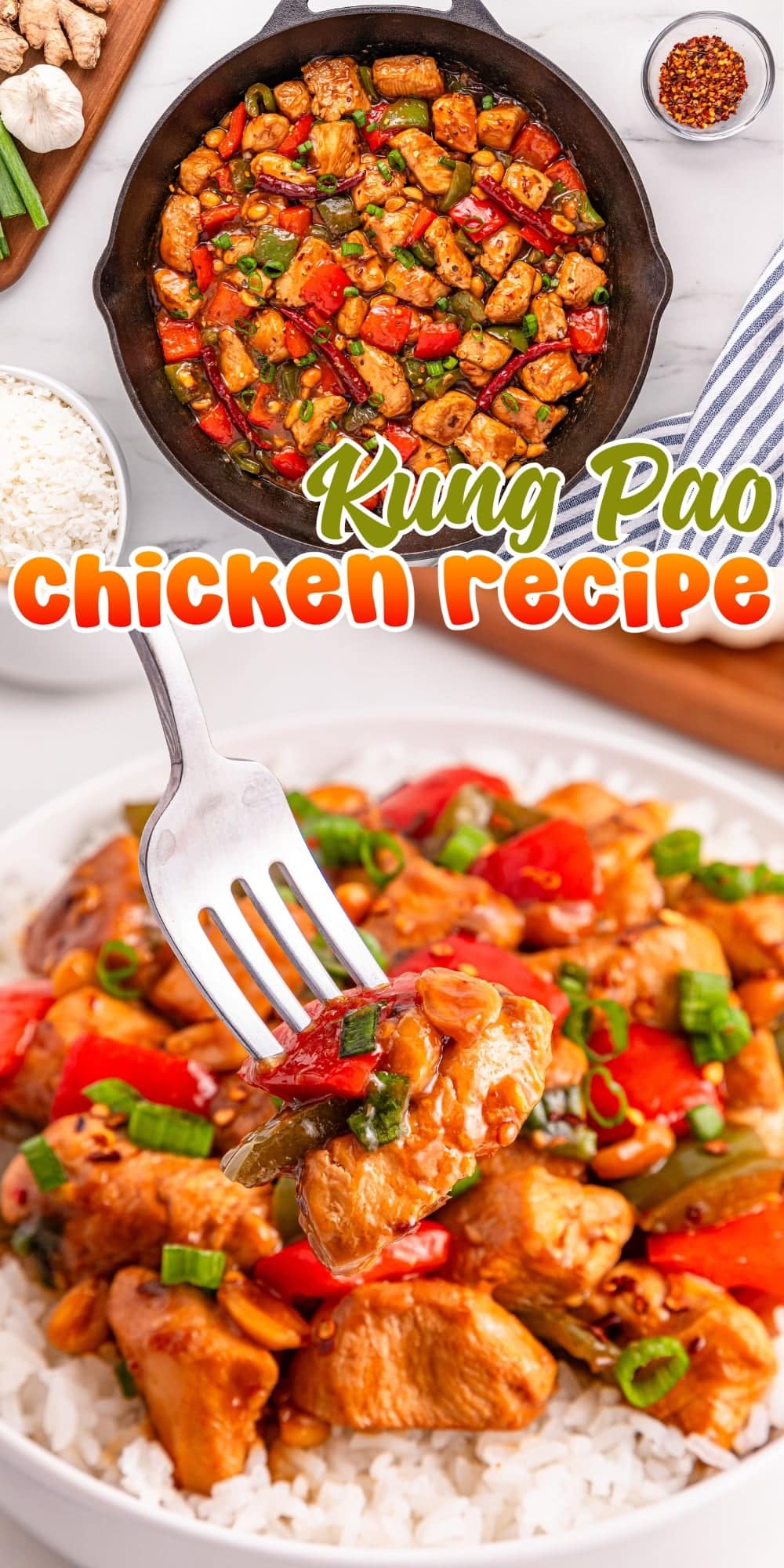
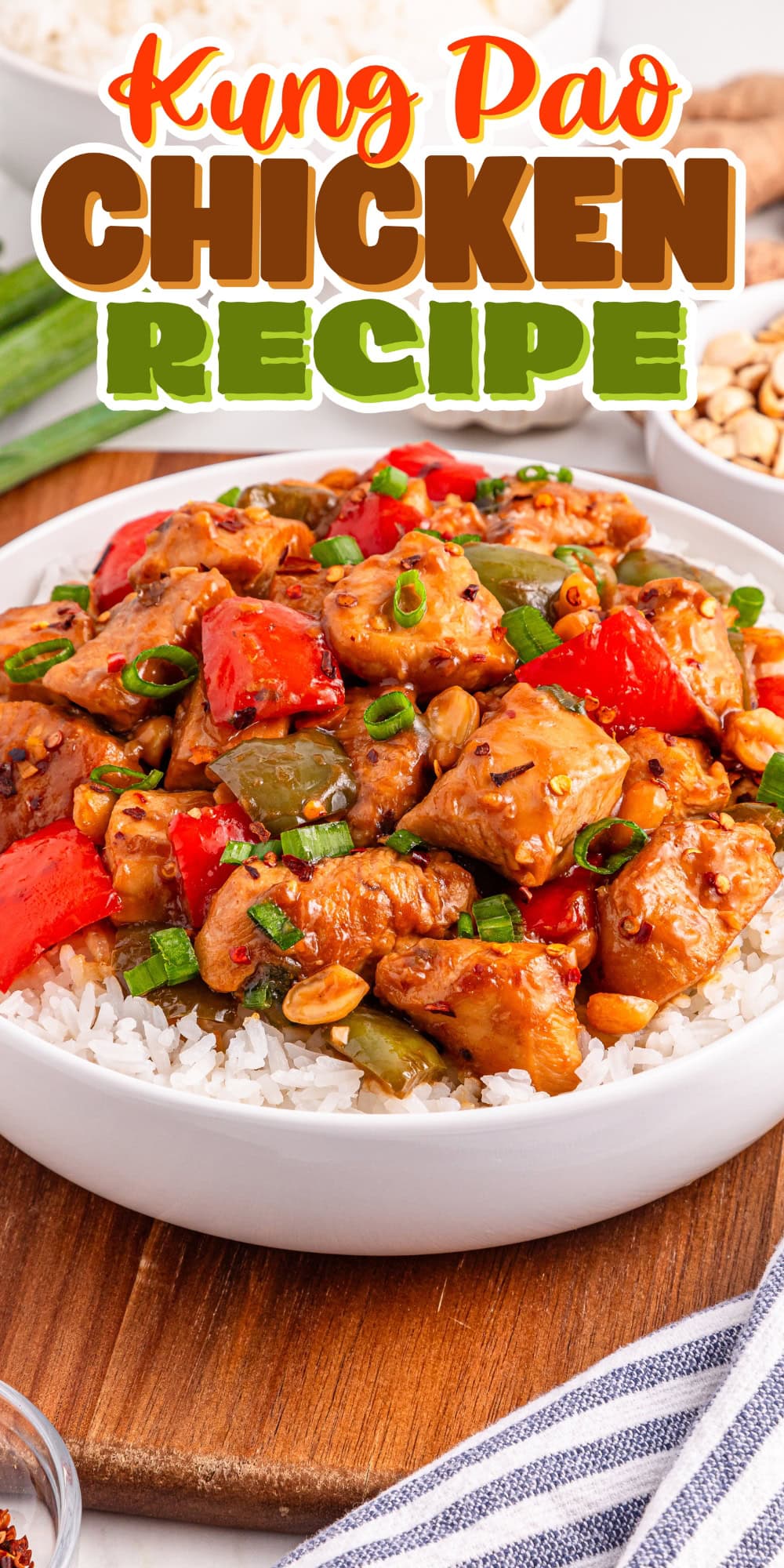
Easy Kung Pao Chicken Recipe with Peanuts and Chilies

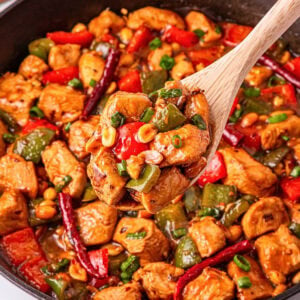
Kung Pao Chicken recipe done right means a glossy sauce, blistered chilies, and peanuts that stay crunchy. I sear the chicken in two batches, so it browns instead of steaming. Keep reading for the sauce ratio and the heat dial that lets you take it mild.
Save This Post!
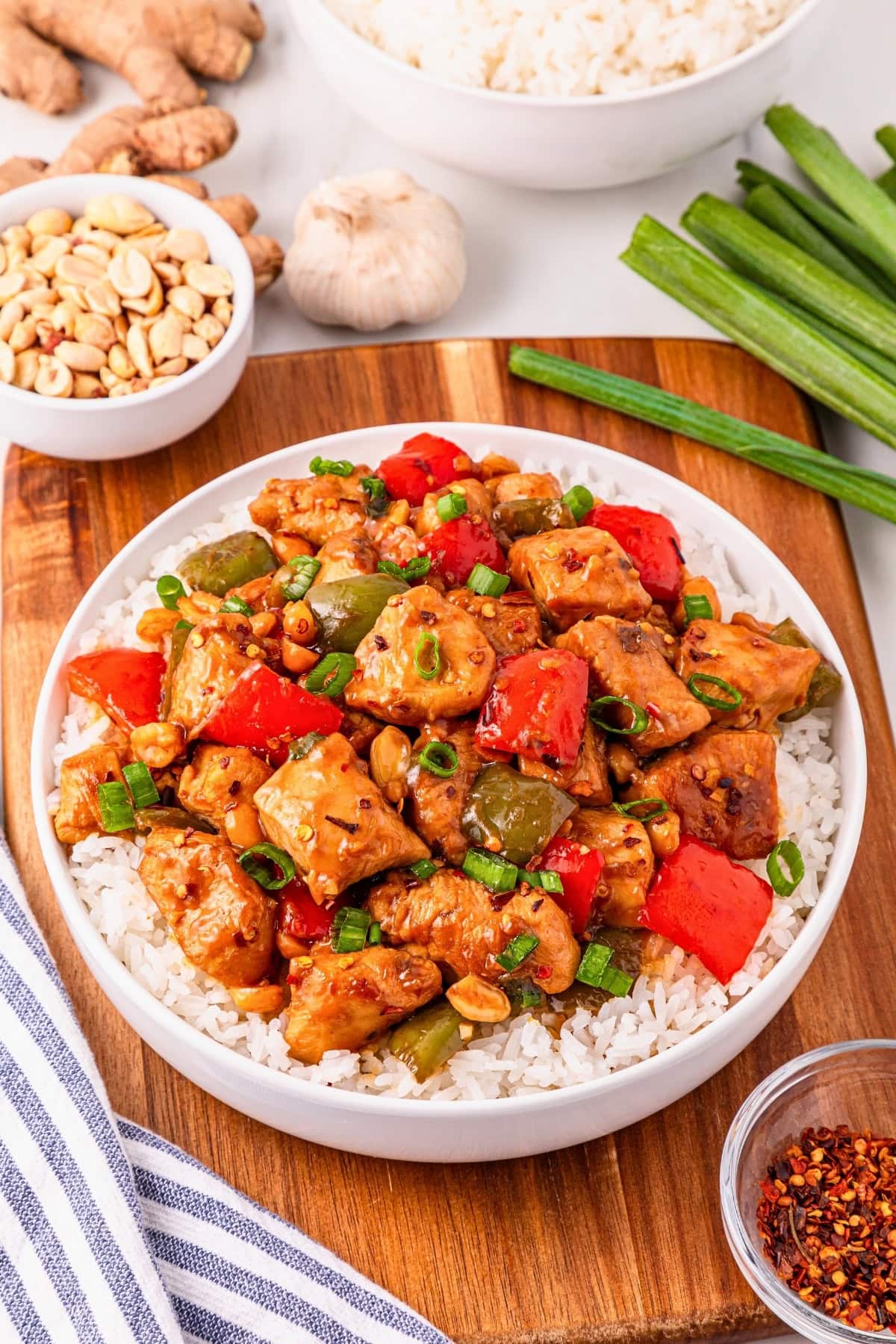
This classic Sichuan dish features the perfect combination of textures and flavors that make it a Chinese takeout favorite. The kung pao sauce creates the ideal coating for the chicken, while dried chilies and red pepper flakes add just the right amount of heat to complement the rich, nutty peanuts.
Looking for more easy chicken dinners? My 30-Minute Air Fryer Teriyaki Chicken Thighs and Teriyaki Pineapple Chicken Bowls are both ready fast. For a full list of weeknight ideas, check out 17 Quick Weeknight Dinner Ideas Your Family Will Request Again.
Reasons You’ll Love This Recipe
- Quick and Easy: Ready in about 35 minutes from start to finish, this easy kung pao chicken recipe is perfect for busy weeknights when you want authentic Chinese food without the wait.
- Restaurant-Quality Flavor: The homemade kung pao sauce delivers the same bold flavor you’d expect from your favorite Chinese restaurant, with the perfect balance of sweet brown sugar, tangy rice vinegar, and savory soy sauce.
- Customizable Heat Level: Whether you prefer mild or spicy, you can easily adjust the dried chilies and red pepper flakes to match your taste preferences.
- Better Than Takeout: Skip the delivery fees and long waits – this authentic kung pao chicken tastes even better than Chinese takeout and uses fresh, quality ingredients you can trust.
Why This Kung Pao Chicken Recipe Works
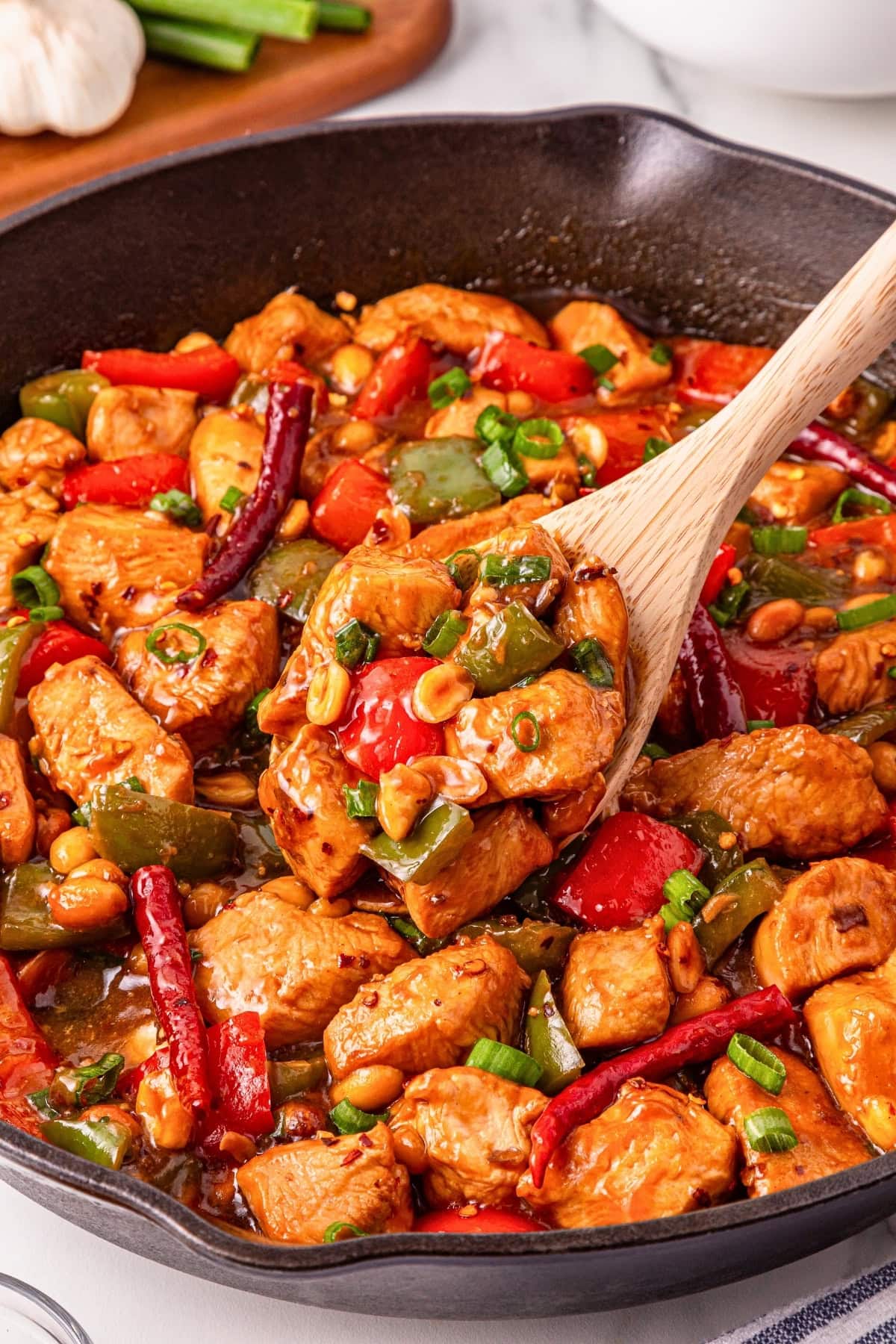
This recipe has the sauce right. Most popular kung pao chicken recipes build the sauce in the pan as they go. Here, the sauce gets whisked together first — soy sauce, rice vinegar, sugar, and a cornstarch slurry — then poured in all at once once the chicken is done. It thickens in under a minute and coats every piece evenly instead of scorching on the pan walls.
Searing the chicken in two batches is the other move that matters. A crowded pan means the pieces steam instead of brown, and you lose the seared edges that make the sauce cling. The peanuts go in last, off the heat, so they stay crunchy through the whole dish. Edit this paragraph with your own kitchen experience — how many rounds it took to get the peanuts right, or what you changed after the first test batch.
If you like quick chicken dinners, you might also enjoy my 17 Quick Weeknight Dinner Ideas, 30-Minute Air Fryer Teriyaki Chicken Thighs, Teriyaki Pineapple Chicken Bowls, and Chicken Marinade with Greek Yogurt.
Kung Pao Chicken Ingredients
See the recipe card below for the full list of ingredients and exact measurements.
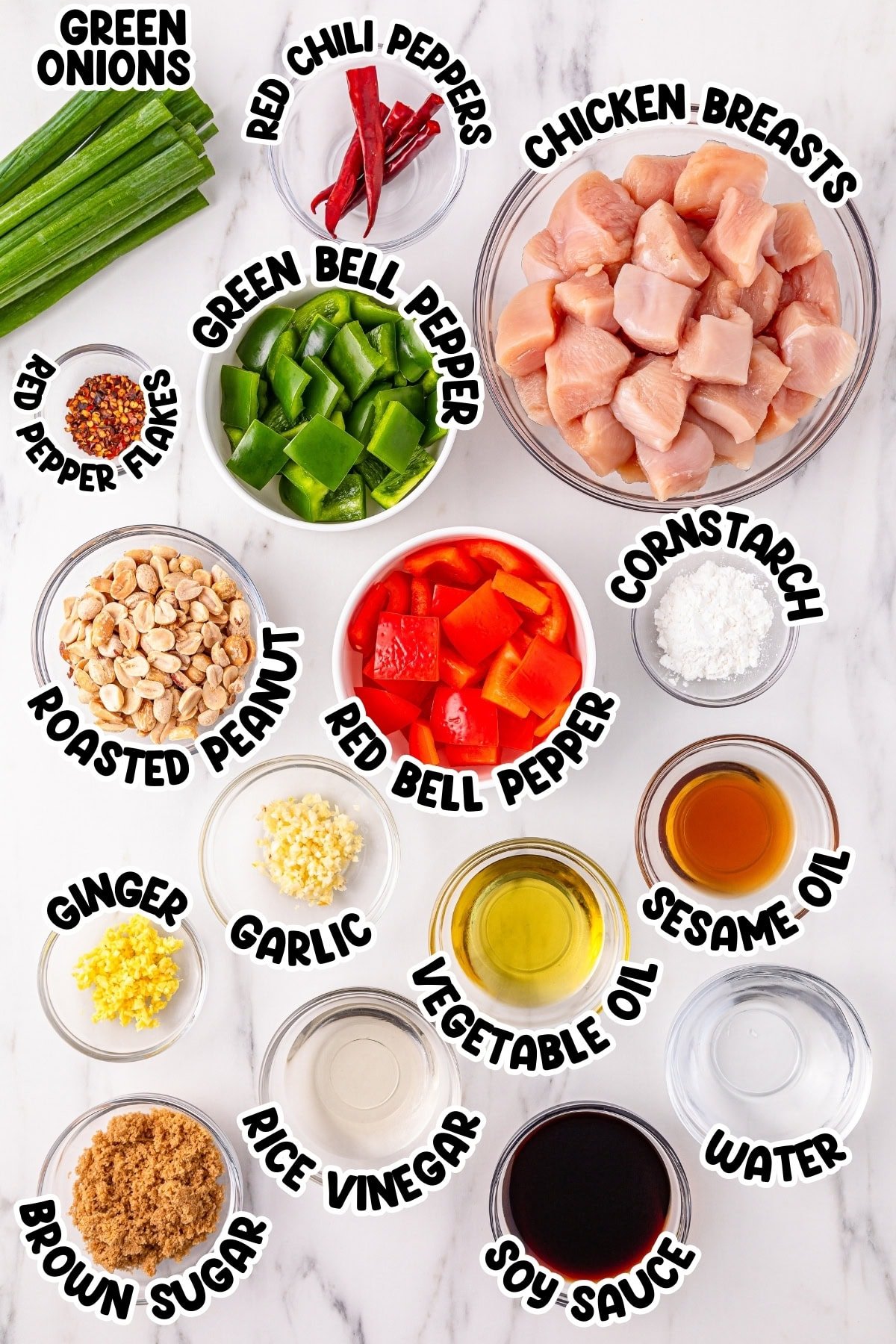
- Chicken breast – Boneless, skinless chicken breast cut into bite-sized pieces browns evenly and picks up the marinade fast. Chicken thighs, shrimp, or firm tofu all work as swaps.
- Soy sauce – Provides the umami base for both the marinade and the kung pao sauce. Use tamari for a gluten-free option, or coconut aminos for a lighter flavor.
- Cornstarch – Creates the silky texture in the sauce and coats the chicken so it sears rather than steams. It controls how thick the final sauce turns out.
- Brown sugar – Adds the sweetness that balances the spicy and tangy elements. It is also what makes the sauce glossy.
- Rice vinegar – Provides the tangy flavor that defines kung pao sauce. Chinese black vinegar works too and adds a slightly smoky note. White vinegar is a fallback if needed.
- Sesame oil – Adds depth and authentic toasted flavor. Add it with the sauce mixture, not in the cooking oil.
- Bell peppers – Red and green peppers add crunch, color, and mild sweetness that cut through the heat. You can add zucchini, mushrooms, or water chestnuts alongside them.
- Garlic and ginger – Fresh aromatics that form the dish’s flavor base. Pre-minced works in a pinch, but fresh makes a noticeable difference.
- Dry roasted peanuts – Provide the signature crunch and richness that makes this dish kung pao. Add them at the very end to keep them crisp. Cashews are a direct swap; omit entirely for a nut-free version.
- Dried red chili peppers – Add authentic Sichuan-style heat and visual appeal. Remove the seeds for milder flavor; leave them in for extra spice.
- Red pepper flakes – Secondary heat that can be adjusted up, down, or left out entirely without changing the dish structure.
How to Make Kung Pao Chicken (step-by-step directions)
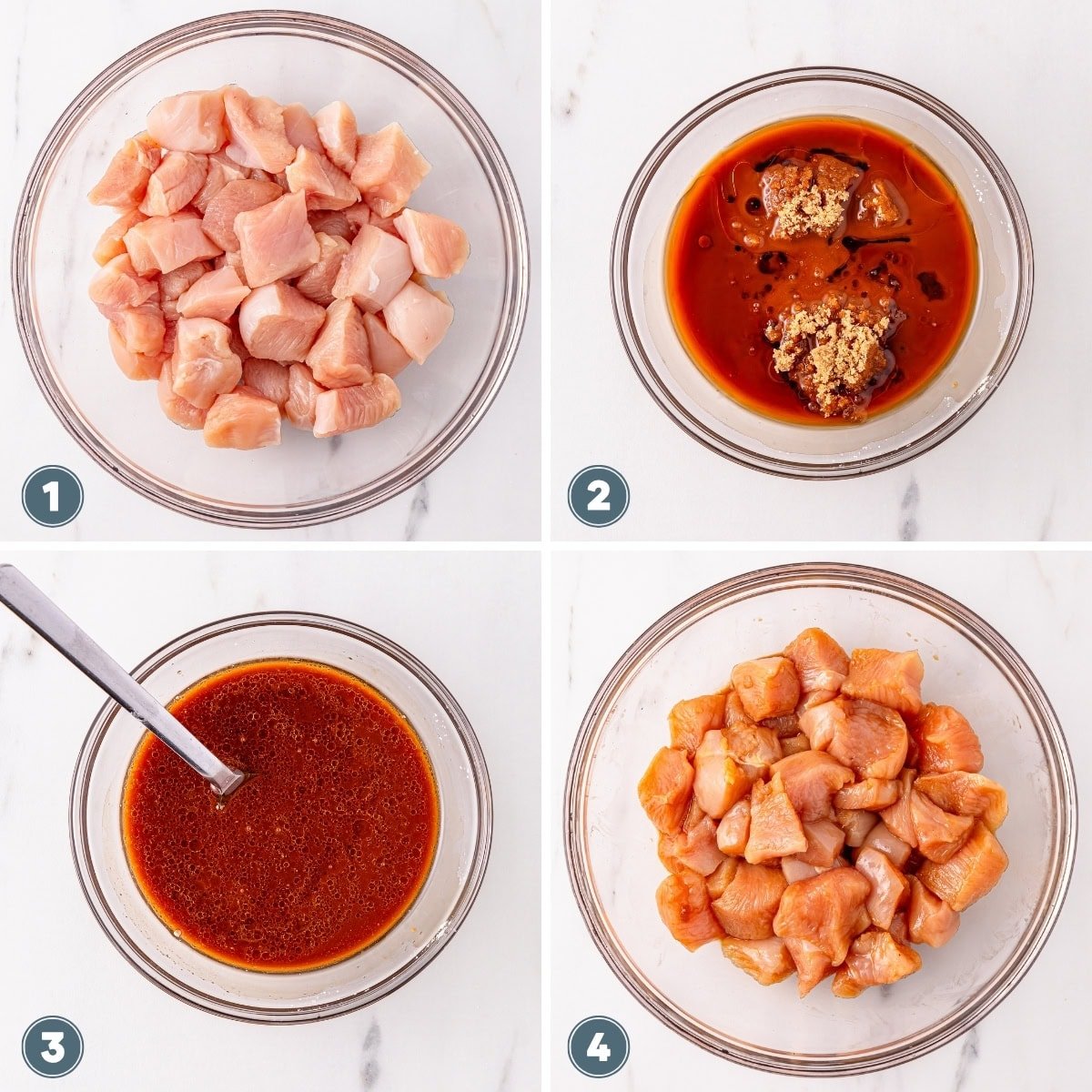
STEP 1. Start by cutting the chicken breast into uniform bite-sized pieces and placing them in a large bowl. This ensures even cooking and the perfect texture in every bite. (Photo 1)
STEP 2. Create the marinade by whisking soy sauce and cornstarch together in a small bowl until completely smooth. Add brown sugar, rice vinegar, and sesame oil, whisking until the mixture is well combined. Reserve most of this sauce for later, using only 2 tablespoons to marinate the chicken pieces. (Photos 2 & 3)
STEP 3. Toss the chicken with the marinade and let it rest at room temperature for 15 minutes. This step helps the chicken absorb the flavors and develop a tender texture. (Photo 4)
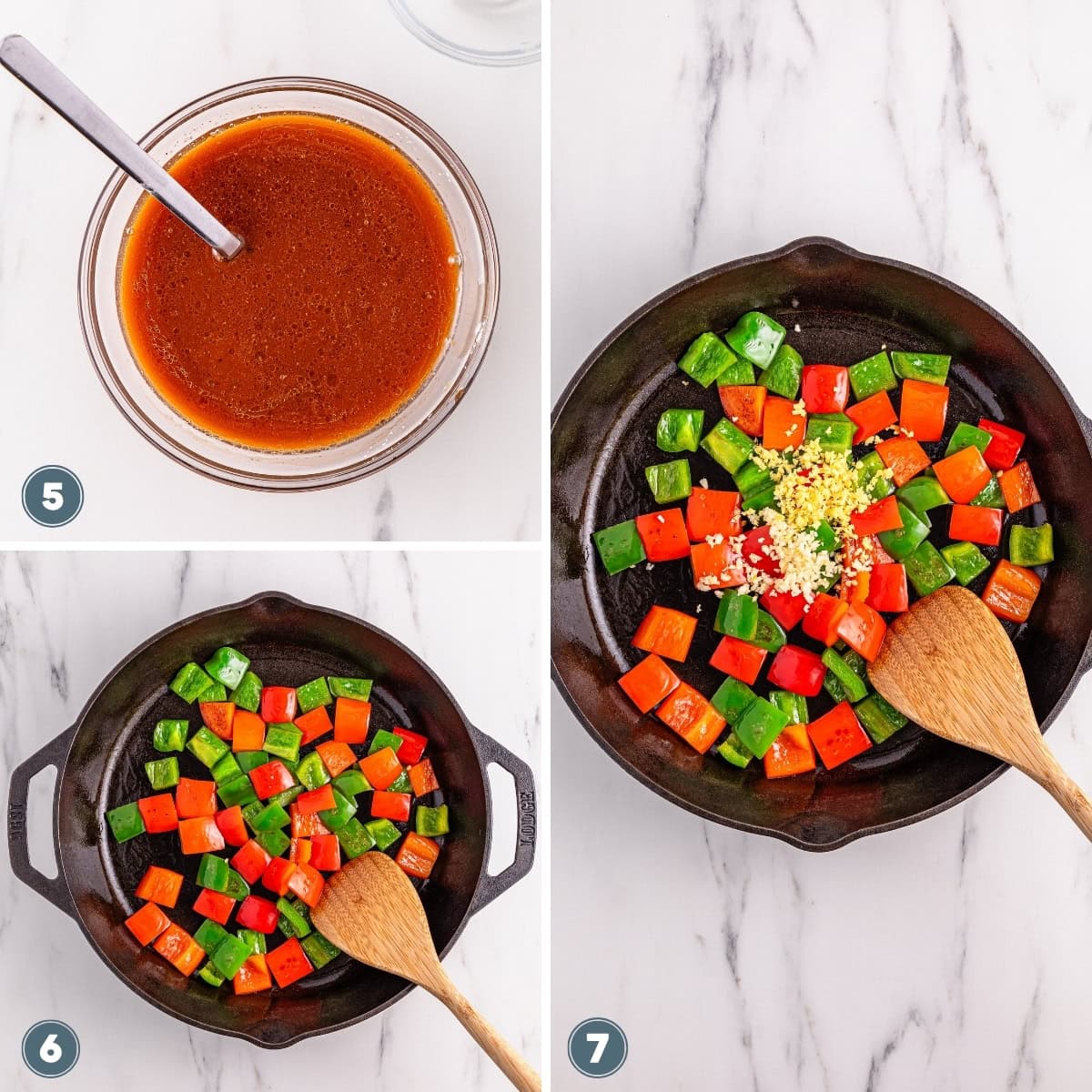
STEP 4. While the chicken marinates, prepare the remaining sauce by adding water to the reserved mixture in a medium bowl. Stir until combined, then set aside. (Photo 5)
STEP 5. Heat vegetable oil in a large skillet or large nonstick skillet over medium-high heat. When the hot pan shimmers, add the bell peppers and stir-fry for 3-5 minutes until they reach your desired tenderness. Add minced garlic and ginger, cooking for 1-2 minutes until fragrant. Transfer to a clean bowl. (Photos 6 & 7)
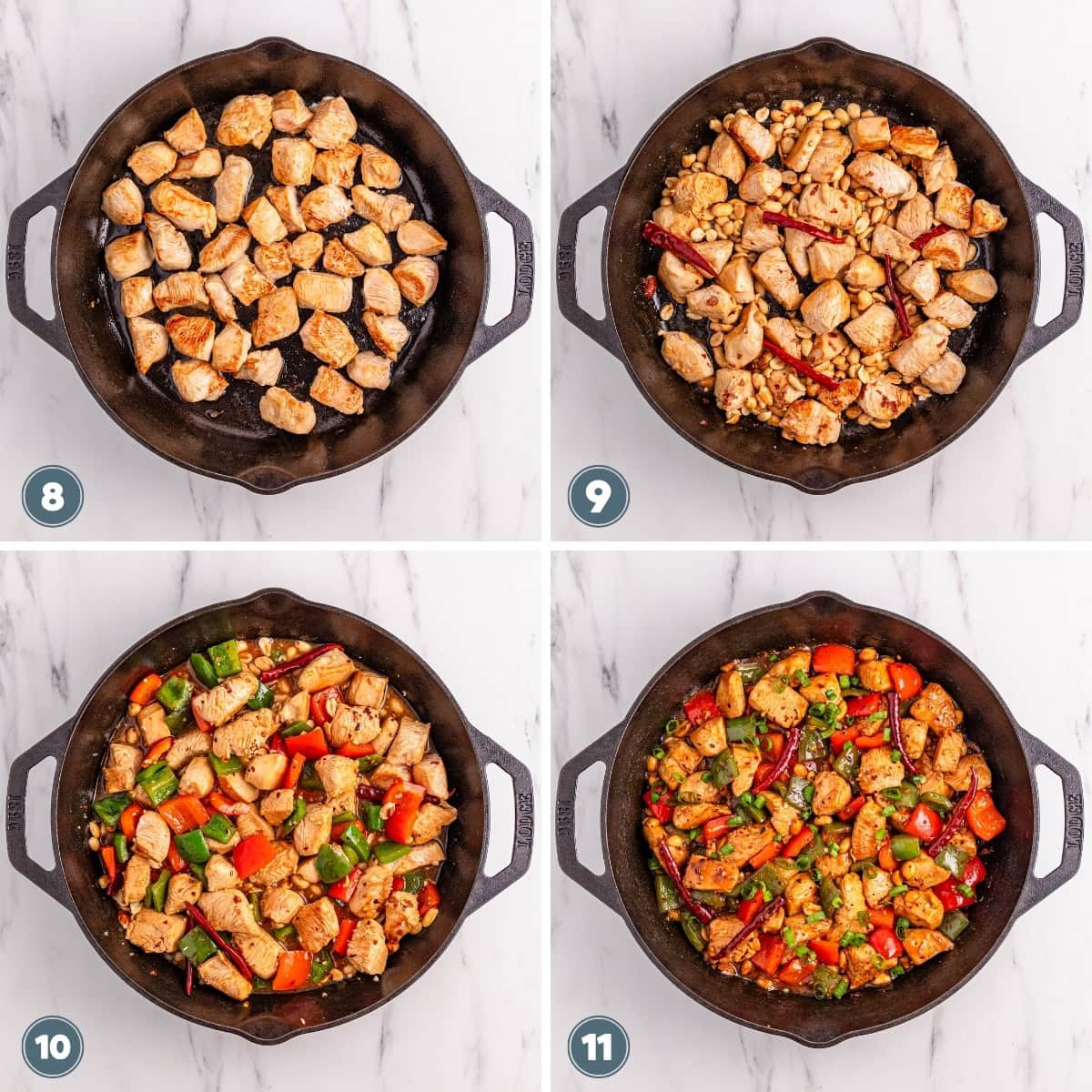
STEP 6. In the same skillet, add more oil if needed and cook the marinated chicken over medium-high heat. Stir frequently to ensure even cooking for about 4-5 minutes, until no longer pink. Add the peanuts and dried chilies, cooking for another minute while stirring constantly to prevent burning. (Photos 8 & 9)
STEP 7. Return the sautéed vegetables to the skillet, pour the prepared sauce over everything, and season with red pepper flakes to taste. Reduce heat to medium and simmer gently until the sauce thickens, about 3-4 minutes. (Photos 10 & 11)
Tips for Spicy Kung Pao Chicken
- Prep everything first – Have all ingredients cut and sauces mixed before you start cooking, as stir-fries move quickly once you begin.
- Don’t overcrowd the pan – Cook chicken in a single layer for best browning and texture.
- Control the heat – Adjust dried chilies and red pepper flakes based on your spice tolerance.
- Sauce consistency – If the sauce becomes too thick, add water one tablespoon at a time until you reach the desired consistency.
Common Mistakes to Avoid When Making Spicy Kung Pao Chicken
- Crowding the pan. Too much chicken at once, and it steams instead of searing. You lose the brown edges that hold the sauce. Work in two batches.
- Adding the peanuts too early. Peanuts go in at the end, off the heat. Any earlier and they soften in the sauce and lose their crunch.
- Leaving the chili seeds in when you want mild. De-seed the dried chilies before they go in the pan. The heat lives in the seeds and the white membrane.
- Adding the sauce before the pan is hot enough. The sauce needs high heat to thicken quickly. A lukewarm pan means the cornstarch takes too long and the sauce turns gluey instead of glossy.
How to Store and Reheat
- Storage: Allow the kung pao chicken to cool completely before transferring to an airtight container. This prevents condensation that could make the dish soggy.
- Refrigerator: Store leftover kung pao chicken in the refrigerator for up to 3 days. The flavors actually develop and intensify overnight, making leftovers incredibly delicious.
- Freezing: While possible, freezing isn’t recommended as the vegetables may become mushy and the peanuts can lose their crunch.
- Reheating: Warm leftovers in a skillet over medium heat, adding a splash of water if the sauce has thickened too much. You can also microwave in 30-second intervals, stirring between each heating.
Serving Suggestions
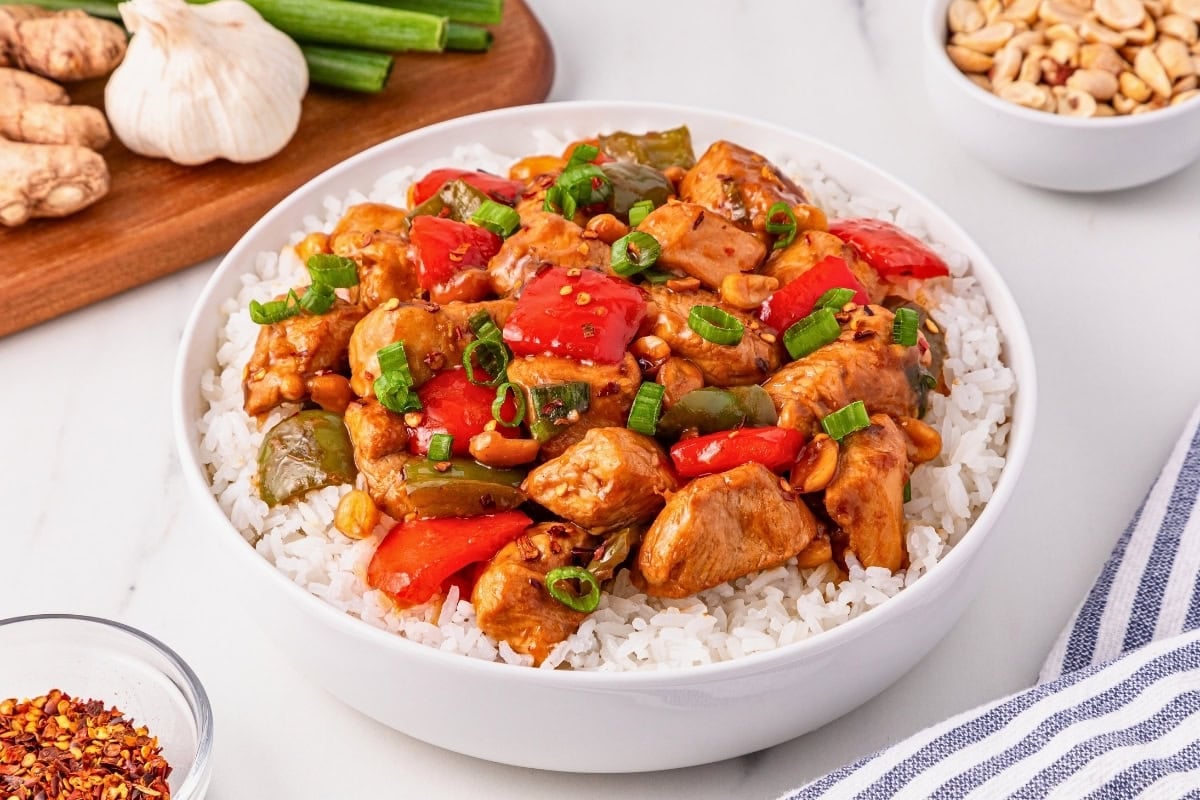
Serve this authentic Kung Pao chicken over steaming white rice to soak up every drop of that incredible sauce. For a heartier meal, try it with our Cilantro-Lime Rice or pair it with Easy Homemade Fried Rice.
This dish also works beautifully as part of a larger Chinese feast alongside Air Fryer Chicken and Waffles for a fusion twist, or serve with Homemade Soft Pretzels as an unexpected appetizer combination.
Recipe FAQs
Absolutely! Remove the seeds from the dried red chili peppers and reduce the red pepper flakes to your comfort level. You can also omit the dried chilies entirely and rely solely on a pinch of red pepper flakes for mild heat.
Cut the chicken breast into uniform cubes about 3/4 inch in size. This ensures even cooking and makes the dish easier to eat with chopsticks or a fork.
Yes! Chicken thighs work wonderfully in this kung pao chicken recipe and often stay more tender during cooking. Just be sure to remove any excess fat before cutting into pieces.
You can use white vinegar, though the flavor will be slightly sharper. Chinese black vinegar or even a small amount of balsamic vinegar can work, though they’ll change the flavor profile slightly.
The kung pao sauce should coat the back of a spoon and cling to the chicken and vegetables without being gummy. If it’s too thin, simmer a bit longer; if too thick, add water a tablespoon at a time.
Kung pao means dried chilies, peanuts, and a sweet and tangy soy-based sauce. The chicken is cut small and cooked fast. Skip the peanuts, and it stops being kung pao.
Yes, and cashews work well if you have a peanut allergy at the table. They toast faster than peanuts, so add them at the very end. The dish will taste milder and a little sweeter.
Swap the soy sauce for tamari and check that your hoisin is labeled gluten-free. Everything else in the sauce is already fine. The texture does not change at all.
Kung Pao Chicken
Ingredients
- 1.5 pounds boneless skinless chicken breasts cut into bite-sized pieces
- 3 tablespoons soy sauce
- 2-3 teaspoons cornstarch depending on how thick you want the sauce
- 3 tablespoons brown sugar
- 2 tablespoon rice vinegar
- 1 tablespoon sesame oil
- ⅓ cup water
- 1-2 tablespoons vegetable oil for frying
- 1 red bell pepper deseeded and cut into cubes
- 1 green bell pepper deseeded and cut into cubes
- 3-4 cloves garlic minced
- 2 teaspoons ginger minced or grated
- ½ cup dry roasted peanut halves I used lightly salted
- 5 dried red chili peppers deseeded (you can leave some seeds for more spice, if desired)
- ¾ teaspoon red pepper flakes or to desired spice
- Sliced green onions for garnish
Instructions
- Start by cutting the chicken breast into uniform bite-sized pieces and placing them in a large bowl. This ensures even cooking and the perfect texture in every bite.
- Create the marinade by whisking soy sauce and cornstarch together in a small bowl until completely smooth. Add brown sugar, rice vinegar, and sesame oil, whisking until the mixture is well combined. Reserve most of this sauce for later, using only 2 tablespoons to marinate the chicken pieces.
- Toss the chicken with the marinade and let it rest for 15 minutes at room temperature. This step ensures the chicken absorbs the flavors and develops a tender texture.
- While the chicken marinates, prepare the remaining sauce by adding water to the reserved mixture in a medium bowl. Stir until well combined and set aside.
- Heat vegetable oil in a large skillet or large nonstick skillet over medium-high heat. When the hot pan shimmers, add the bell peppers and stir-fry for 3-5 minutes until they reach your desired tenderness. Add minced garlic and ginger, cooking for 1-2 minutes until fragrant. Transfer to a clean bowl.
- In the same skillet, add more oil if needed and cook the marinated chicken over medium-high heat. Stir frequently to ensure even cooking, about 4-5 minutes until no longer pink. Add the peanuts and dried chilies, cooking for another minute while stirring constantly to prevent burning.
- Return the sautéed vegetables to the skillet, pour the prepared sauce over everything, and season with red pepper flakes to taste. Reduce heat to medium heat and simmer gently until the sauce thickens, about 3-4 minutes.
Notes
- Prep everything first – Have all ingredients cut and sauces mixed before you start cooking, as stir fries move quickly once you begin.
- Don’t overcrowd the pan – Cook chicken in a single layer for best browning and texture.
- Control the heat – Adjust dried chilies and red pepper flakes based on your spice tolerance.
- Sauce consistency – If the sauce becomes too thick, add water one tablespoon at a time until you reach the desired consistency.
Nutrition Information
Hungry for more?
Follow me on Pinterest and make sure to comment below!