
Tender Slow Cooker Mongolian Beef (Melt-in-Your-Mouth!)


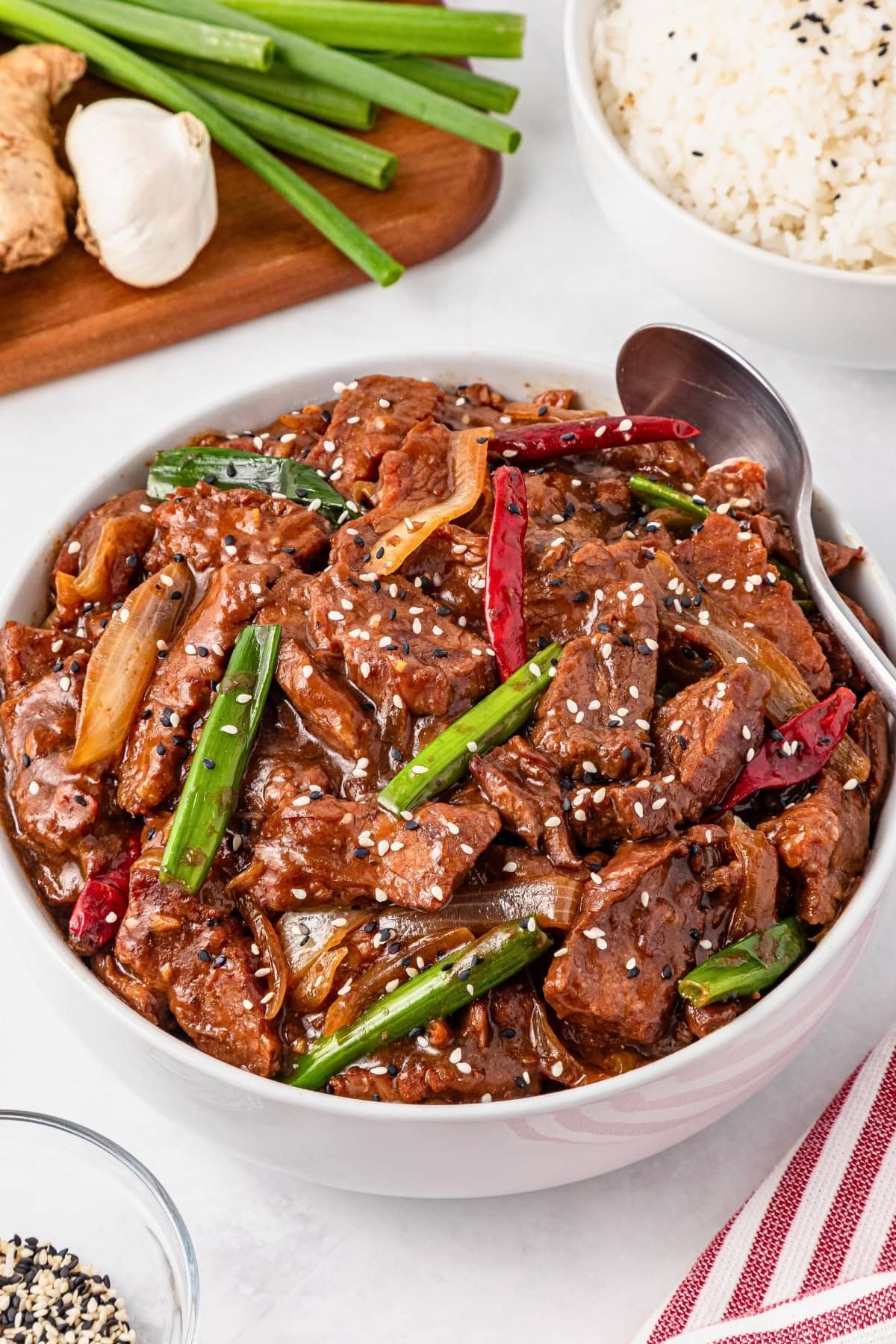
This slow cooker Mongolian beef transforms simple ingredients into an incredibly flavorful dish with minimal effort. Tender strips of flank steak simmer in a rich, sweet and savory sauce that rivals your favorite Chinese restaurant – all while your slow cooker does the work.
Save This Post!
Craving take-out without the expense? This easy slow cooker Mongolian beef recipe delivers restaurant-quality flavor right in your kitchen. The melt-in-your-mouth beef and thick, glossy sauce create a meal that’s perfect for busy weeknights when you want something delicious but don’t have time to stand over the stove.
For more slow cooker beef recipes, try my Slow Cooker Beef Broccoli or Slow Cooker Indian Beef for variety in your meal rotation!
Reasons You’ll Love This Recipe
- Unbelievably tender meat: The low and slow cooking method breaks down the proteins in the flank steak, resulting in incredibly tender beef that melts in your mouth with each bite.
- Better than takeout: This homemade version gives you all the flavors of restaurant Mongolian beef without MSG or excessive oil. You control the ingredients for a healthier, more affordable meal.
- Prep it and forget it: Just 15 minutes of prep in the morning means you can come home to a dinner that’s ready when you are. Perfect for busy weeknights when cooking from scratch seems impossible.
- Versatile and customizable: Easily adjust the sweetness, spice level, or even the cut of beef to suit your preferences. Add extra vegetables like broccoli or snow peas in the last 30 minutes of cooking for a complete meal.

What is Mongolian Beef?
Mongolian beef is a popular dish served in Chinese-American restaurants, featuring slices of beef cooked in a savory-sweet sauce. Despite its name, it doesn’t actually originate from Mongolia but was created in Taiwan and popularized in the United States.
Traditional Mongolian beef is stir-fried quickly over high heat, but this slow cooker version takes a different approach, allowing the beef to become exceptionally tender while absorbing all the delicious flavors of the sauce. The signature combination of soy sauce, brown sugar, and ginger creates that distinctive taste that makes Mongolian beef a favorite takeout option.
What Makes This Better Than Takeout
You know that moment when you crave Mongolian beef but don’t want to deal with ordering, waiting, and paying premium prices for a meal that might not even taste as good as you hoped? This slow cooker version solves all those problems while giving you complete control over what goes into your food.
The biggest difference is in the quality of ingredients. Restaurant Mongolian beef often relies on MSG, excess oil, and lower-quality cuts of meat to maximize profits. When you make it at home, you choose exactly what flank steak you use, control the sodium content with low-sodium soy sauce, and skip any artificial additives. Your kitchen fills with the aroma of fresh ginger and garlic rather than mystery ingredients from a commercial kitchen.
You Control the Sweet-Savory Balance
Restaurant versions can vary wildly in sweetness depending on who’s cooking that day. Some batches come out overly sweet like candy, while others taste more like salty soy sauce with no depth. Making it yourself means you can adjust the brown sugar to your preference, add a touch more ginger if you love that warmth, or dial up the heat with extra chili peppers. The recipe becomes truly yours.
Better Texture, Every Time
One of the most frustrating things about takeout Mongolian beef is when it arrives with rubbery, overcooked meat or a sauce that’s either too thick and gloopy or watery and bland. The slow cooker method guarantees tender, melt-in-your-mouth beef that’s been cooking low and slow for hours. The sauce naturally thickens to the perfect glossy consistency without any guesswork or last-minute stirring over a hot stove.
Cost Savings Add Up
A typical Mongolian beef dish from a restaurant costs anywhere from $12 to $18, and that’s before delivery fees and tips. This homemade version uses about 2 pounds of flank steak (around $14-18 depending on where you shop) and a handful of pantry staples you probably already have. You end up with enough for 6-8 servings instead of just 1-2 portions, bringing the cost per meal down to about $3-4 per person. Plus, you’ll have leftovers for lunch the next day.
The convenience factor is undeniable too. While takeout requires you to be home for delivery or make a trip to pick it up, this recipe lets you prep everything in 15 minutes, turn on the slow cooker, and walk away. Come home 6-8 hours later to a meal that’s ready to serve, with none of the soggy containers or disappointing presentation that sometimes comes with delivery.

Mongolian Beef Ingredients
See the recipe card below for the full ingredient list and exact measurements.
- Flank steak – The traditional cut for Mongolian beef, sliced thinly against the grain for maximum tenderness. This lean cut becomes melt-in-your-mouth tender when cooked low and slow in the crockpot.
- Cornstarch – Serves two purposes: it helps thicken the sauce to that perfect consistency and creates a light coating on the beef that helps the sauce cling better to each piece.
- Large onion – Adds a savory foundation and natural sweetness as it slowly cooks down. Slice it thick enough that it won’t completely dissolve during the long cooking time.
- Garlic cloves – Provides essential aromatic flavor that’s central to Chinese cooking. Freshly minced garlic delivers the best flavor, but pre-minced works in a pinch.
- Fresh ginger – Adds that distinctive warm, spicy note that’s characteristic of Mongolian beef. Fresh ginger is strongly recommended over dried for authentic flavor.
- Toasted sesame oil – Brings a nutty, aromatic quality that elevates the entire dish. A little goes a long way, so the two tablespoons are perfect for adding depth without overpowering.
Low sodium soy sauce – Forms the savory base of the sauce. Using low-sodium variety allows you to control the saltiness of the final dish better. - Brown sugar – Creates the signature sweetness in Mongolian beef that balances the salty soy sauce. It also helps create that glossy, thick sauce during slow cooking.
- Water or broth – Provides the liquid needed for slow cooking and prevents the sauce from becoming too concentrated. Beef broth adds extra flavor if you have it available.
- Black pepper – Adds a simple but essential background heat that enhances the other flavors without making the dish spicy.
- Green onions – Added near the end of cooking, they provide freshness, color, and a mild onion flavor that perfectly complements the rich beef.
- Dried red chili peppers – Optional but authentic, they add a gentle heat to the background of the dish without making it truly spicy.
Substitutions and Additions
- Skirt steak or sirloin steak – These cuts work well as substitutes for flank steak. Slice them thinly against the grain for best results. Chuck roast can also work if you prefer a slightly fattier cut.
- Honey – Can replace brown sugar for a different type of sweetness with floral notes. Use about ¼ cup instead of ⅓ cup of brown sugar.
- Hoisin sauce – Add 2 tablespoons for a more complex flavor with subtle five-spice notes. This makes the dish richer and more aromatic.
- Broccoli florets – Add 2 cups in the last 30 minutes of cooking for a complete meal with vegetables. They’ll soak up the delicious sauce while maintaining some texture.
- Sriracha – Add 1-2 teaspoons if you prefer a spicier version with a different heat profile than using dried chilis.
- Red bell pepper – Sliced and added in the last 30 minutes, it adds color, sweetness, and vitamin C to the dish.
How to Make Slow Cooker Mongolian Beef (step-by-step directions)

STEP 1. Begin by slicing your flank steak against the grain into thin strips, about ¼ inch thick. Cutting against the grain is crucial for tender beef.
STEP 2. Place the sliced flank steak into your slow cooker and sprinkle the cornstarch over it. Gently toss the meat until all pieces are evenly coated with cornstarch. This helps thicken the sauce and gives the beef a light coating. (Photos 1 & 2)
STEP 3. Add the sliced onions on top of the beef. They’ll release moisture as they cook, which helps prevent the meat from drying out. (Photo 3)

STEP 4. In a medium bowl, combine minced garlic, fresh ginger, toasted sesame oil, low-sodium soy sauce, brown sugar, water (or broth), and black pepper. Whisk until the sugar is completely dissolved. (Photos 4 & 5)
STEP 5. Pour this sauce mixture over the beef and onions in the slow cooker, making sure everything is well coated. (Photo 6)

STEP 6. Cover with the lid and cook on LOW for 6-8 hours (recommended for the most tender meat) or on HIGH for 3-4 hours if you’re short on time. (Photo 7)
STEP 7. About 30 minutes before serving, stir in the green onion pieces and dried red chili peppers if using. This allows their flavors to incorporate without overcooking.
STEP 8. Once done, the beef should be very tender and the sauce thickened to a glossy consistency. If the sauce is too thin, see the recipe tips section for thickening options.
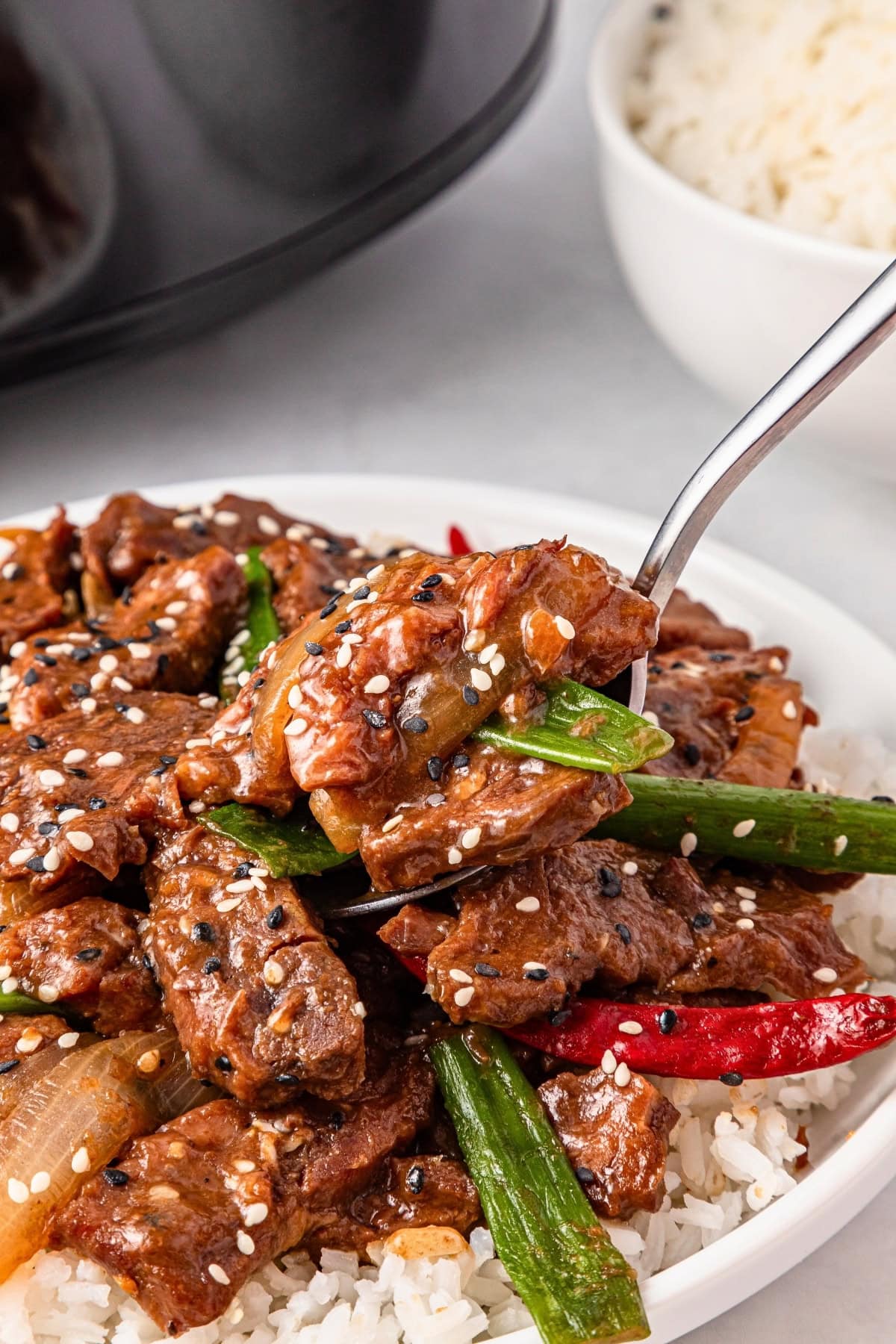
STEP 9. Garnish with sesame seeds and additional sliced green onions before serving over freshly cooked white rice. (Photo 8)

Recipe Tips
- Slice against the grain: Always cut your flank steak against (perpendicular to) the grain for the most tender results. This shortens the muscle fibers and makes the meat easier to chew.
- Don’t skip the cornstarch: The cornstarch coating on the beef is essential for developing that characteristic texture and thickening the sauce properly.
- Check for sauce consistency: If your sauce is too thin at the end of cooking, remove about ½ cup of the liquid, mix in 1 tablespoon of cornstarch until smooth, then stir this slurry back into the slow cooker and cook on HIGH for 15-20 minutes with the lid off.
- Add vegetables strategically: If adding vegetables like broccoli or bell peppers, put them in during the last 30 minutes of cooking so they don’t become mushy.
- Low is best: While you can cook this dish on HIGH to save time, cooking on LOW provides the most tender, melt-in-your-mouth beef texture.
Common Mistakes and How to Avoid Them
Mistake #1: Cutting the Beef With the Grain
This is probably the most common mistake that leads to tough, chewy Mongolian beef. Flank steak has very pronounced muscle fibers running in one direction, and if you slice parallel to these fibers (with the grain), you’ll be eating through those long, tough strands with every bite. Always look for the direction of the grain and cut perpendicular to it. Think of it like cutting the muscle fibers into shorter pieces that are much easier to chew.
Pro tip: Put your flank steak in the freezer for about 20-30 minutes before slicing. This firms it up just enough to make cutting thin, even slices much easier without the meat sliding around under your knife.
Mistake #2: Skipping or Rushing the Cornstarch Coating
Some people skip the cornstarch coating step thinking it doesn’t matter much, but this is a crucial element. The cornstarch serves two important purposes: it helps thicken the sauce as it cooks, and it creates a light coating on the beef that helps the sauce cling better to each piece. Without it, you’ll end up with thin, runny sauce and beef that doesn’t have that characteristic glossy coating.
Make sure to toss the beef thoroughly with the cornstarch so every piece is evenly coated. Don’t dump it all in one spot, sprinkle it over the meat, and use your hands or tongs to distribute it well before adding any liquid.
Mistake #3: Cooking on High to Save Time
We get it—you’re hungry and want dinner faster. But Mongolian beef is one of those dishes that truly benefits from the low and slow approach. Cooking on HIGH can make the edges of the meat tough while leaving the center undercooked, and the sauce won’t develop the same rich, complex flavor. The LOW setting allows the connective tissue in the flank steak to break down properly, the sugar to caramelize gently, and all the flavors to meld together into that signature taste.
If you’re really pressed for time, the HIGH setting works in a pinch (3-4 hours), but the texture and flavor won’t be quite as exceptional as the LOW setting version.
Mistake #4: Opening the Lid Too Often
Every time you lift the slow cooker lid to check on things, peek at the progress, or take a quick stir, you’re releasing heat and adding about 15-20 minutes to your cooking time. More importantly, the constant temperature fluctuations can affect the final texture of your beef. Set it, forget it, and trust the process.
The only time you need to open the lid is 30 minutes before serving to add the green onions and chili peppers.
Mistake #5: Not Accounting for Sauce Thickness
Some people expect the sauce to be thick from the start and panic when it looks thin during cooking. The sauce will thicken as it cooks, especially during the last hour or two. However, if your sauce is still too thin at the end of cooking time, don’t just accept it.
Remove about half a cup of the cooking liquid, mix in a tablespoon of cornstarch until smooth, then stir this slurry back into the slow cooker and cook on HIGH with the lid off for 15-20 minutes. This quickly brings the sauce to the perfect consistency without overcooking the meat.
Mistake #6: Using the Wrong Cut of Beef
While the recipe calls for flank steak, sometimes grocery stores substitute it with similar-looking cuts that won’t work as well. Don’t use stew meat (too tough for this cooking time), round steak (too lean and will dry out), or ribeye (too fatty and expensive for slow cooking).
Stick with flank steak, or if you can’t find it, skirt steak or sirloin steak work as acceptable substitutes. Just make sure whatever you use is sliced thinly against the grain.
Storing Tips
- Storage: Allow the Mongolian beef to cool completely before transferring to airtight containers. This prevents condensation that could water down the sauce.
- Refrigerator: Store leftover Mongolian beef in an airtight container in the refrigerator for 3-4 days. The flavors often deepen overnight, making leftovers especially delicious.
- Freezing: This dish freezes well for up to 3 months. Portion it into meal-sized containers and cool completely before freezing. Thaw overnight in the refrigerator before reheating.
- Reheating: Warm leftovers gently in a saucepan over medium-low heat, adding a splash of water or broth if the sauce has thickened too much. Microwave on 70% power, stirring occasionally, to prevent the beef from becoming tough.
Serving Suggestions
This slow cooker Mongolian beef pairs perfectly with Cilantro-Lime Rice for a refreshing contrast to the rich, savory beef. For a complete meal, add a side of Green Beans Almondine or simple steamed broccoli to balance the plate with some green vegetables.
For a more substantial spread, serve alongside my Crockpot Spanish Rice (which can cook in a second slow cooker) and perhaps some 27 Easy Roasted Vegetables in the Oven for a colorful, complete meal that’s sure to impress.
Slow Cooker vs Instant Pot Method
Both methods give you delicious Mongolian beef, but they work best for different situations. Here’s what you need to know to choose the right one.
Slow Cooker Method:
- Takes 6-8 hours on LOW or 3-4 hours on HIGH
- Completely hands-off once you start it
- Produces incredibly tender, fall-apart beef texture
- More forgiving timing if you’re running late
- Richer, mellower flavor from extended cooking
Instant Pot Method:
- Ready in about 30 minutes total (including pressure time)
- Requires you to be home when cooking
- Beef is tender but has a slightly firmer bite
- Brighter, more distinct flavors
- Less forgiving with timing
Quick Instant Pot Conversion
Want to make this in your Instant Pot instead? Use the Sauté function to brown the cornstarch-coated beef in batches with 1 tablespoon oil. Add onions and all sauce ingredients, then cook on High Pressure for 10-12 minutes with a 10-minute natural release. Stir in green onions and chili peppers after opening, and use Sauté mode to thicken the sauce if needed.
For more details on converting slow cooker recipes, check out my How to Convert Slow Cooker to Instant Pot guide.
Slow Cooker vs Traditional Stovetop Method
The traditional stir-fry method uses high heat and a wok for quick cooking, while the slow cooker takes the low-and-slow approach. Here’s how they compare so you can pick the best method for your needs.
Stovetop Stir-Fry Method:
- Ready in 15-20 minutes start to finish
- Requires constant attention and stirring
- Firmer texture with a slight sear and bite
- Concentrated, caramelized flavors from high heat
- Sharp, punchy garlic and ginger notes
- Best for quick weeknight dinners when you’re home
Slow Cooker Method:
- Takes 6-8 hours but completely hands-off
- No stirring or monitoring needed
- Incredibly soft, fall-apart tender texture
- Mellow, well-rounded blended flavors
- Sweet, infused garlic and ginger throughout
- Perfect for meal prep and busy days
Which One Should You Choose?
Go stovetop when you want dinner fast and prefer more textural bite in your beef. Choose the slow cooker when you need to prep ahead, want maximum tenderness, or are making a big batch for meal prep. Many home cooks use the slow cooker as their regular method and save stovetop for when they’re actively craving the cooking process.
The slow cooker version also reheats better since the beef is already ultra-tender. For another easy slow cooker Asian-inspired dish, try my Slow Cooker Beef Broccoli which offers similar hands-off convenience.
Recipe FAQs
It’s best not to use frozen beef directly in the slow cooker as it stays in the temperature danger zone too long, which can be a food safety concern. Instead, thaw your flank steak completely in the refrigerator before slicing and using in this recipe for the best results and food safety.
Tough Mongolian beef is usually the result of either cutting the meat with the grain instead of against it, using the HIGH setting for too long, or using a very lean cut that wasn’t sliced thinly enough. Make sure to slice your flank steak against the grain into thin strips (about ¼ inch thick) and cook on LOW for best results.
Yes! You can convert this to an Instant Pot recipe easily. Use the Sauté function to brown the cornstarch-coated beef in batches with a little oil, then add all ingredients and cook on High Pressure for 10-12 minutes with a 10-minute natural release. See my guide on How to Convert Slow Cooker to Instant Pot for more details.
Broccoli, bell peppers, snow peas, and carrots all work wonderfully with Mongolian beef. Add firmer vegetables like carrots about 2 hours before the end of cooking (on LOW), and more delicate vegetables like broccoli, bell peppers, or snow peas in the last 30 minutes to maintain their texture and color.
Traditional Mongolian beef has a mild level of spice that comes from dried chilies. This recipe includes optional dried red chili peppers that add a gentle background heat without making the dish too spicy. You can adjust the spice level by increasing or decreasing the number of dried chilies, or by adding a teaspoon of sriracha or red pepper flakes to taste.
Need More Main Dish Recipes? Try These:

Easy Slow Cooker Mongolian Beef Recipe
Ingredients
- 2 pounds flank steak sliced into thin strips
- ¼ cup cornstarch
- 1 large onion sliced
- 3-5 garlic cloves minced
- 1 teaspoon fresh ginger minced
- 2 tablespoons toasted sesame oil
- ¾ cup low sodium soy sauce
- ⅓ cup brown sugar
- ½ cup water or broth
- ½ teaspoon black pepper
- 6 green onions cut into 2-inch pieces
- 6 dried red chili peppers optional, for spice
- Sesame seeds optional, for garnish
Instructions
- Begin by slicing your flank steak against the grain into thin strips, about ¼ inch thick. Cutting against the grain is crucial for tender beef.
- Place the sliced flank steak into your slow cooker and sprinkle the cornstarch over it. Gently toss the meat until all pieces are evenly coated with cornstarch. This helps thicken the sauce and gives the beef a light coating.
- Add the sliced onions on top of the beef. They’ll release moisture as they cook, which helps prevent the meat from drying out.
- In a medium bowl, combine minced garlic, fresh ginger, toasted sesame oil, low-sodium soy sauce, brown sugar, water (or broth), and black pepper. Whisk until the sugar is completely dissolved.
- Pour this sauce mixture over the beef and onions in the slow cooker, making sure everything is well coated.
- Cover with the lid and cook on LOW for 6-8 hours (recommended for the most tender meat) or on HIGH for 3-4 hours if you’re short on time.
- About 30 minutes before serving, stir in the green onion pieces and dried red chili peppers if using. This allows their flavors to incorporate without overcooking.
- Once done, the beef should be very tender and the sauce thickened to a glossy consistency. If the sauce is too thin, see the recipe tips section for thickening options.
- Garnish with sesame seeds and additional sliced green onions before serving over freshly cooked white rice.
Notes
- Slice against the grain: Always cut your flank steak against (perpendicular to) the grain for the most tender results. This shortens the muscle fibers and makes the meat easier to chew.
- Don’t skip the cornstarch: The cornstarch coating on the beef is essential for developing that characteristic texture and thickening the sauce properly.
- Check for sauce consistency: If your sauce is too thin at the end of cooking, remove about ½ cup of the liquid, mix in 1 tablespoon of cornstarch until smooth, then stir this slurry back into the slow cooker and cook on HIGH for 15-20 minutes with the lid off.
- Add vegetables strategically: If adding vegetables like broccoli or bell peppers, put them in during the last 30 minutes of cooking so they don’t become mushy.
- Low is best: While you can cook this dish on HIGH to save time, cooking on LOW provides the most tender, melt-in-your-mouth beef texture.
Nutrition Information
Hungry for more?
Follow me on Pinterest and make sure to comment below!
