Winter Salad Recipes: Fresh Ideas for Cold-Weather Eating


When winter arrives, you might think salad season is over. But winter salad recipes can be just as satisfying and delicious as their summer counterparts when you know which ingredients to use. From crisp apples and pomegranates to hearty roasted vegetables and rich dressings, cold-weather salads offer comfort and nutrition all season long.

Save This Post!
Winter doesn’t mean sacrificing fresh flavors or healthy eating. With the right combination of seasonal produce, warming elements, and creative dressings, you can enjoy salads that feel appropriate for chilly days while keeping your meals light and nutritious.
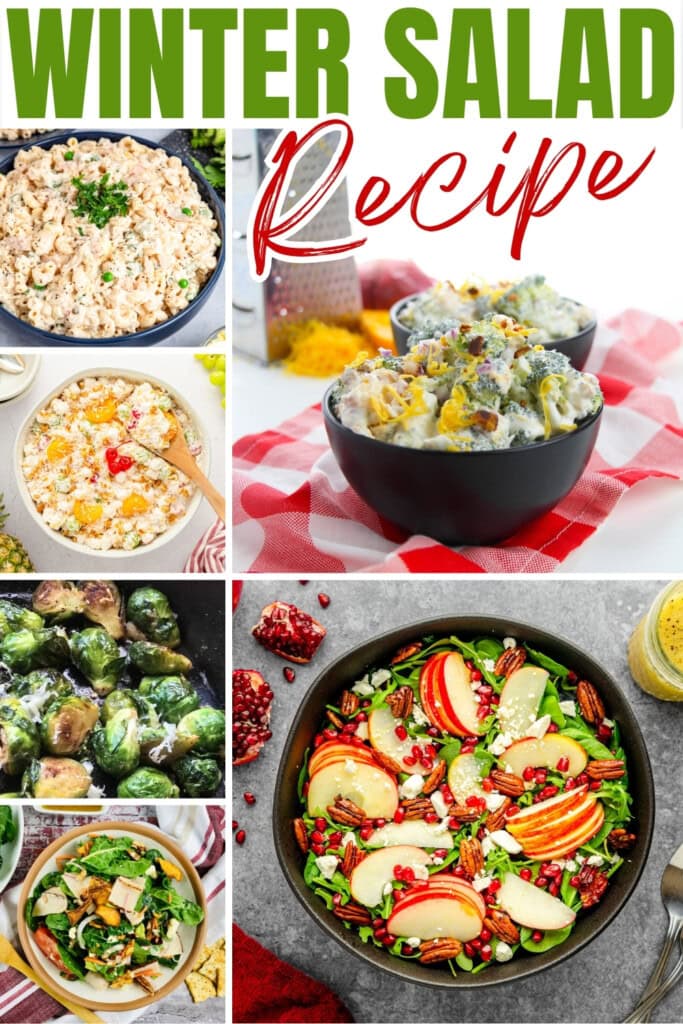
Looking for more salad inspiration? My Apple Pomegranate Salad with Honey Mustard Dressing showcases winter fruits at their best, while my Easy Broccoli Salad features vegetables that thrive in cooler months. For holiday gatherings, my Ambrosia Salad is a sweet classic that appears at many winter celebrations.
Reasons You’ll Love Winter Salads
- Seasonal Produce at Its Best: Winter brings a bounty of incredible ingredients like crisp apples, tart pomegranates, sweet citrus, hearty greens, and roasted root vegetables. These ingredients are at peak flavor and nutrition during the cold months, making them perfect for creating satisfying salads that actually taste better in winter.
- Heartier and More Filling: Unlike light summer salads, winter salad recipes often include warming elements like roasted vegetables, grains, nuts, and rich dressings that make them substantial enough to serve as complete meals. They’re designed to satisfy your hunger while still providing all the fresh vegetables your body needs.
- Budget-Friendly Options: Shopping for in-season produce means you’ll pay less at the grocery store. Winter vegetables like cabbage, Brussels sprouts, carrots, and apples are typically more affordable during cold months, making these salads easy on your wallet.
- Year-Round Healthy Eating: Winter salads help you maintain healthy eating habits when it’s tempting to rely solely on heavy comfort foods. They provide essential vitamins, fiber, and nutrients that boost your immune system during cold and flu season.
Best Winter Salad Ingredients
Winter Fruits
Winter is prime season for several fruits that add natural sweetness and bright flavors to salads. Apples are the star of winter salads – try crisp Fuji, Honeycrisp, or Granny Smith varieties for different flavor profiles. My Fuji Apple Salad Dressing features the sweet-tart flavor of Fuji apples that pairs beautifully with savory ingredients.

Pomegranates bring jewel-like seeds that add crunch, tartness, and gorgeous color to any salad. They’re packed with antioxidants and pair wonderfully with nuts and cheese. Citrus fruits like oranges, grapefruit, and blood oranges brighten winter salads with their sunny flavor and vibrant color. Pears offer a softer, sweeter option that works especially well in salads with blue cheese or walnuts.
Hearty Winter Vegetables
Root vegetables become sweet and caramelized when roasted, making them perfect for warm salads. Try roasted beets, carrots, sweet potatoes, or butternut squash as a base or topping. Brussels sprouts transform from bitter to nutty and delicious when roasted or shaved raw – my Roasted Brussels Sprouts with Balsamic Glaze would be excellent served over greens as a warm winter salad.
Cabbage, both red and green, provides crunch and stays fresh longer than delicate lettuces. It’s perfect for slaws and holds up well to heavy dressings. Broccoli adds texture and nutrition – you can use it raw for crunch or lightly blanched for easier digestion.
Kale and other winter greens like arugula, radicchio, and endive stand up to hearty toppings and rich dressings better than tender summer lettuces. They’re also more nutritious and flavorful during winter months.
Protein Additions
Make your winter salad recipes more substantial by adding protein. Grilled or roasted chicken breast is a classic choice that pairs well with any combination of winter ingredients. Hard-boiled eggs add creaminess and protein – they’re budget-friendly and easy to prepare in advance, just like in my Macaroni Tuna Salad which uses them for extra richness.
Chickpeas and other beans provide plant-based protein and make salads more filling. Roasted chickpeas add extra crunch. Nuts and seeds like pecans, walnuts, almonds, and pumpkin seeds contribute healthy fats, protein, and satisfying crunch that makes salads feel more complete.
Cheese options like feta, blue cheese, goat cheese, or shaved Parmesan add richness and flavor that complement winter produce beautifully.
Winter Salad Dressing Ideas
The right dressing can make or break a winter salad. Heavier, richer dressings work better in cold weather than the light vinaigrettes you might prefer in summer.
Creamy Dressings
Creamy dressings add richness that makes winter salads more satisfying. My Homemade Ranch Seasoning Mix can be turned into fresh ranch dressing that’s perfect for heartier salads. Simply mix the seasoning with buttermilk, sour cream, and mayo for a homemade version that tastes better than store-bought.
Caesar dressing works beautifully with kale and roasted vegetables. The creamy, garlicky flavor complements the slightly bitter taste of winter greens. Blue cheese or gorgonzola dressings pair wonderfully with apples, pears, and nuts – the sharp, tangy flavor balances sweet fruits perfectly.
Tahini-based dressings add a nutty, creamy element that works especially well with roasted vegetables and grains. Mix tahini with lemon juice, garlic, and a touch of maple syrup for a unique winter dressing.
Warm Vinaigrettes
Warm dressings are a game-changer for winter salads. They slightly wilt the greens and bring out flavors in a way that cold dressings can’t. Bacon vinaigrette is a classic – the warm bacon fat creates a dressing that makes even simple greens taste indulgent.
Honey mustard dressing provides the perfect balance of sweet and tangy, combining sweetness with a sharp, savory kick that works beautifully with winter fruits and nuts.
Maple balsamic vinaigrette combines the sweetness of maple syrup with the tang of balsamic vinegar for a dressing that tastes like fall and winter. Apple cider vinegar-based dressings bring a fruity acidity that complements winter fruits and vegetables perfectly.
Flavor Combinations That Work
Certain ingredient pairings just work better in winter salads. Apple and cheddar is a classic combination – add some walnuts and dried cranberries for texture. Roasted beets and goat cheese create a sweet-tangy contrast that’s visually stunning with the deep red and white colors.
Brussels sprouts and bacon make a hearty combination that feels decadent but still healthy. Add some Parmesan shavings and a squeeze of lemon. Pear, blue cheese, and candied pecans offer a sophisticated flavor profile that’s perfect for holiday gatherings.
Citrus and avocado provide a bright, creamy combination that feels lighter while still being satisfying. Pomegranate and feta bring together sweet and salty with a beautiful color contrast. Roasted squash and cranberries create a sweet-tart combination that tastes distinctly like winter.
Tips for Making Great Winter Salads
Roast your vegetables to bring out their natural sweetness and add warmth to your salads. Roasted vegetables can be served warm or at room temperature, making them perfect for winter entertaining.
Use sturdy greens that can hold up to heavier toppings and dressings. Kale, cabbage, and Brussels sprouts won’t wilt as quickly as delicate lettuce varieties. If using tender greens, dress them right before serving.
Add texture variety to keep salads interesting. Combine crunchy elements like nuts, seeds, or apple slices with softer ingredients like avocado, cheese, or roasted vegetables. Different textures make each bite more satisfying.
Balance warm and cold elements for salads that are comforting but still refreshing. Try warm roasted vegetables over cold greens, or a warm dressing over room-temperature ingredients.
Don’t overdress your salad – winter dressings are often richer than summer versions, so you need less. Start with a small amount and add more if needed.
Storing Winter Salads
Storage: Winter salads with heartier ingredients store better than delicate summer salads, but proper storage is still important for maintaining freshness and texture. For make-ahead options, try my Garden Veggie Mason Jar Salad with a homemade vinaigrette that layers perfectly for grab-and-go meals.
Refrigerator: Store greens and chopped vegetables separately from dressing in airtight containers for 2-3 days. Roasted vegetables can be stored for up to 5 days and reheated before adding to salads.
Prep Ahead: Winter salad ingredients are perfect for meal prep. Wash and chop greens, roast vegetables, cook grains, and prepare proteins in advance. Store each component separately and assemble salads when ready to eat. Check out my Meal Prep Salad Ideas for a printable guide with even more combinations.
Dressing Storage: Homemade dressings keep in the refrigerator for up to one week in a sealed jar or container. Give them a good shake before using, as ingredients may separate.
Serving Suggestions
Winter salads pair beautifully with heartier mains. Serve alongside my Crockpot Pot Roast for a balanced meal that combines comfort food with fresh vegetables. They also work well with Slow Cooker Paprika Chicken for an easy weeknight dinner.
For a lighter meal, add grains like quinoa, farro, or wild rice to your winter salad to make it more substantial. You can also use pasta – my Cold Italian Tortellini Salad works beautifully with winter vegetables like roasted bell peppers and olives. Top with grilled chicken or hard-boiled eggs for protein. Serve with crusty bread or my Little Caesars Crazy Bread copycat recipe for a satisfying lunch.
Winter salads also make excellent side dishes for holiday gatherings. They provide a fresh, colorful contrast to rich main courses and give guests a lighter option alongside traditional heavy dishes.
FAQs
Winter salad recipes use seasonal ingredients that are available and at their best during cold months. This includes root vegetables, winter greens like kale and Brussels sprouts, winter fruits like apples and pomegranates, and heartier dressings. Winter salads often incorporate warm elements, like roasted vegetables or warm dressings, to make them more appealing when temperatures drop.
Yes! Winter salad ingredients actually hold up better than summer salad components. Roast vegetables in advance and store for up to 5 days. Keep greens, toppings, and dressing separate until ready to serve. Many winter salad recipes even taste better after the flavors have time to meld together, especially grain-based salads.
Focus on variety in texture, temperature, and flavor. Combine crunchy elements like nuts with soft roasted vegetables, mix warm and cold ingredients, and balance sweet fruits with salty cheese or tangy dressings. Don’t be afraid to add unexpected ingredients like dried fruit, roasted chickpeas, or fresh herbs.
Roast vegetables at 400-425°F until caramelized and tender, usually 20-30 minutes depending on the vegetable. Toss with olive oil, salt, and pepper before roasting. Don’t overcrowd the pan – give vegetables space to brown rather than steam. Roasted vegetables can be served warm, at room temperature, or cold in salads.
Absolutely! Winter salad recipes provide essential vitamins, minerals, and fiber your body needs year-round. Winter vegetables are often more nutrient-dense than their summer counterparts. While winter dressings may be richer, you can control portions and use Greek yogurt-based alternatives for lighter options. Adding nuts, seeds, and avocado provides healthy fats that help your body absorb fat-soluble vitamins.