Cooking Basics for Tired Beginners: 10 Skills That Instantly Make Dinner Easier

You don’t need culinary school to get a handle on basic cooking skills. What you actually need is a handful of reliable techniques that make cooking feel less like a guessing game and more like something you’re in control of. Once these click, recipes stop being stressful and start being fun.

Save This Post!
These 10 skills are the ones that genuinely make a difference. Each one opens up a whole category of meals, and most take about five minutes to learn. Think of this as the shortcut to actually enjoying the cooking part of your evening.
1. How to Season Properly
Under-seasoning is the number one reason home-cooked food tastes flat. Salt and pepper are the foundation, but knowing when and how to use them matters more than how much you add. Season in layers as you cook rather than dumping everything on at the end.
Once you’re comfortable with salt and pepper, homemade spice blends are a game-changer. Mixing your own means no fillers, no mystery ingredients, and you can adjust the flavor to suit your family.
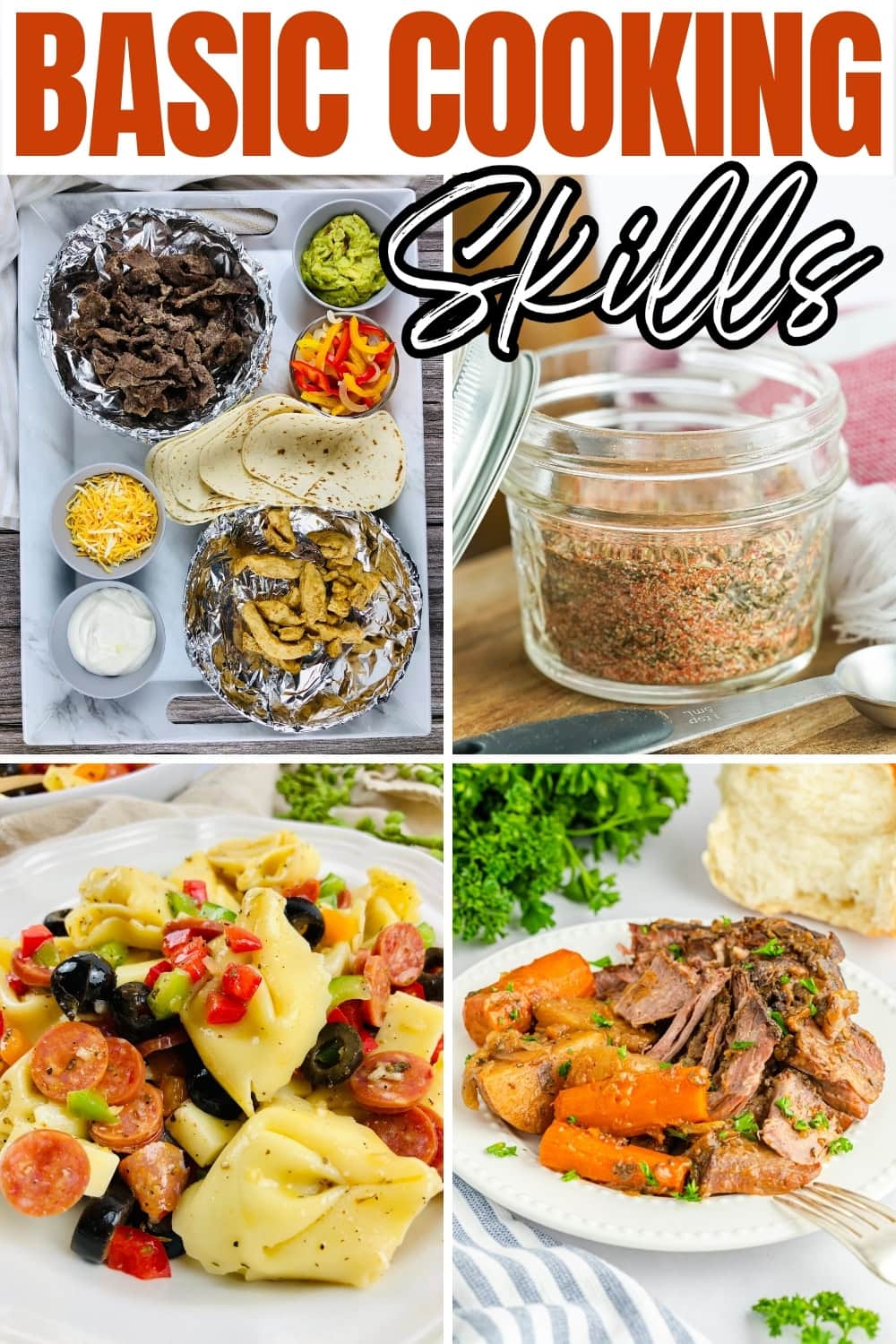
A simple steak seasoning works on far more than steak, and a batch of homemade fajita seasoning means you’re always 30 minutes away from a great weeknight dinner. For anyone who wants to learn more about working with fresh herbs too, the guide to 15 common cooking herbs is worth a bookmark.

2. How to Work a Skillet
A good skillet is your most-used pan, and learning to use it well changes everything. The key things to understand are heat management (medium heat is your friend for most proteins), when to add oil or butter, and how to tell when food is ready to flip rather than forcing it before it’s released naturally from the pan.
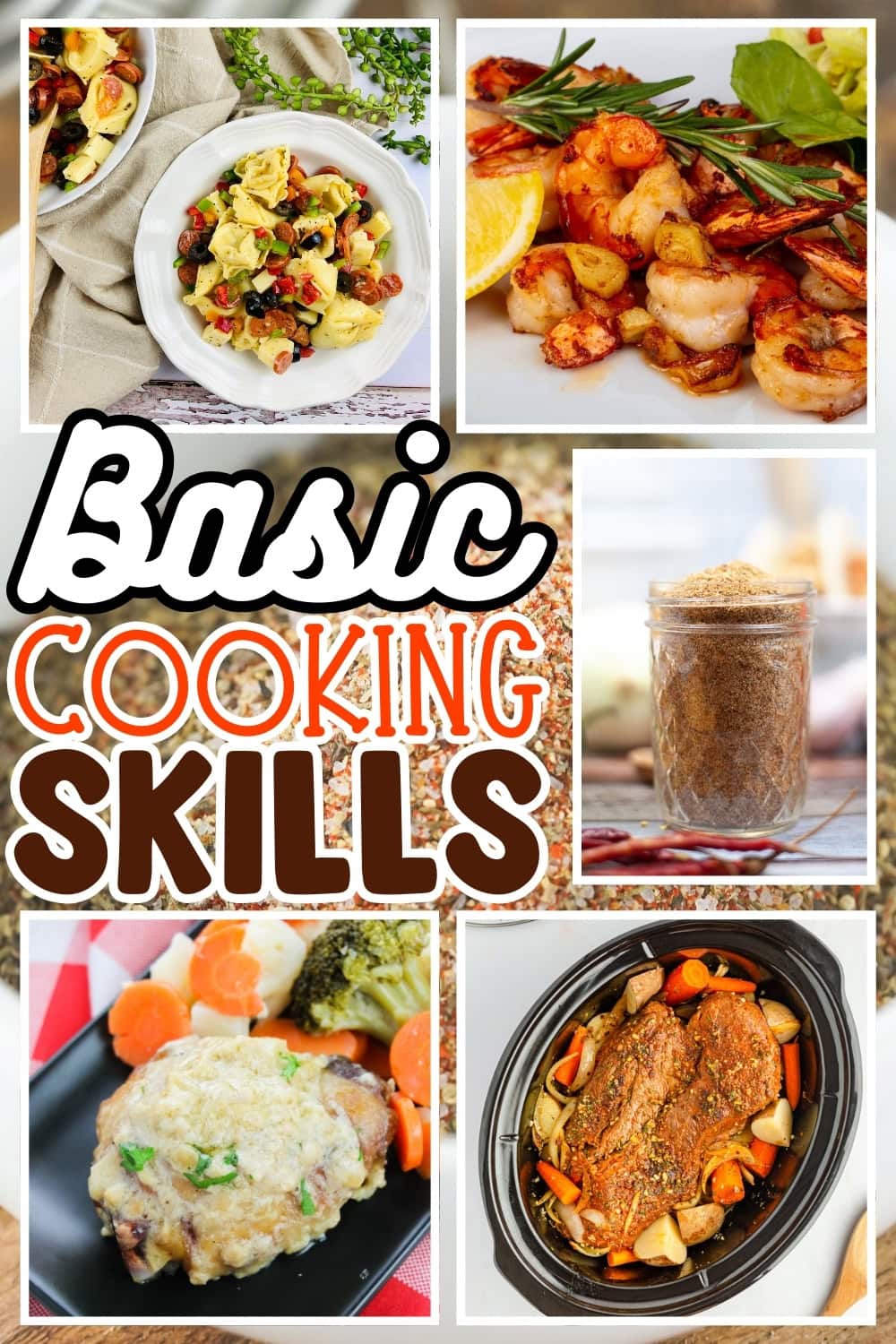
The classic entry-level skillet dish is garlic butter shrimp. Lemon-Garlic Jumbo Shrimp is a great place to start because the cook time is short, the steps are clear, and the result is genuinely impressive for the effort involved.
Once you’re confident with that, a one-pan dinner like Creamy Lemon Chicken shows you how to build a sauce right in the same skillet, which is one of those skills that makes cooking feel like actual cooking.
3. How to Roast Vegetables
Roasting is the easiest way to make vegetables people actually want to eat. High oven heat (425-450°F) draws out natural sugars and creates caramelized, slightly crispy edges that are hard to resist. The basic process is the same for almost everything:
- Toss vegetables in olive oil until lightly coated
- Season generously with salt, pepper, and any spice blend you like
- Spread in a single layer with space between pieces
- Roast at 425-450°F and resist the urge to stir too often
The crowding thing is what most people get wrong. Too many vegetables on one pan creates steam instead of roast, and you end up with soft, watery results instead of golden edges. Easy Sheet Pan Vegetables walks through timing for different vegetable types and is a solid reference to keep on hand.

4. How to Use a Slow Cooker
If you’re tired after work, the slow cooker is your best friend. Add ingredients in the morning, go about your day, come home to dinner. There’s almost no active cooking involved, which makes it the most forgiving method for beginners who aren’t confident about timing.
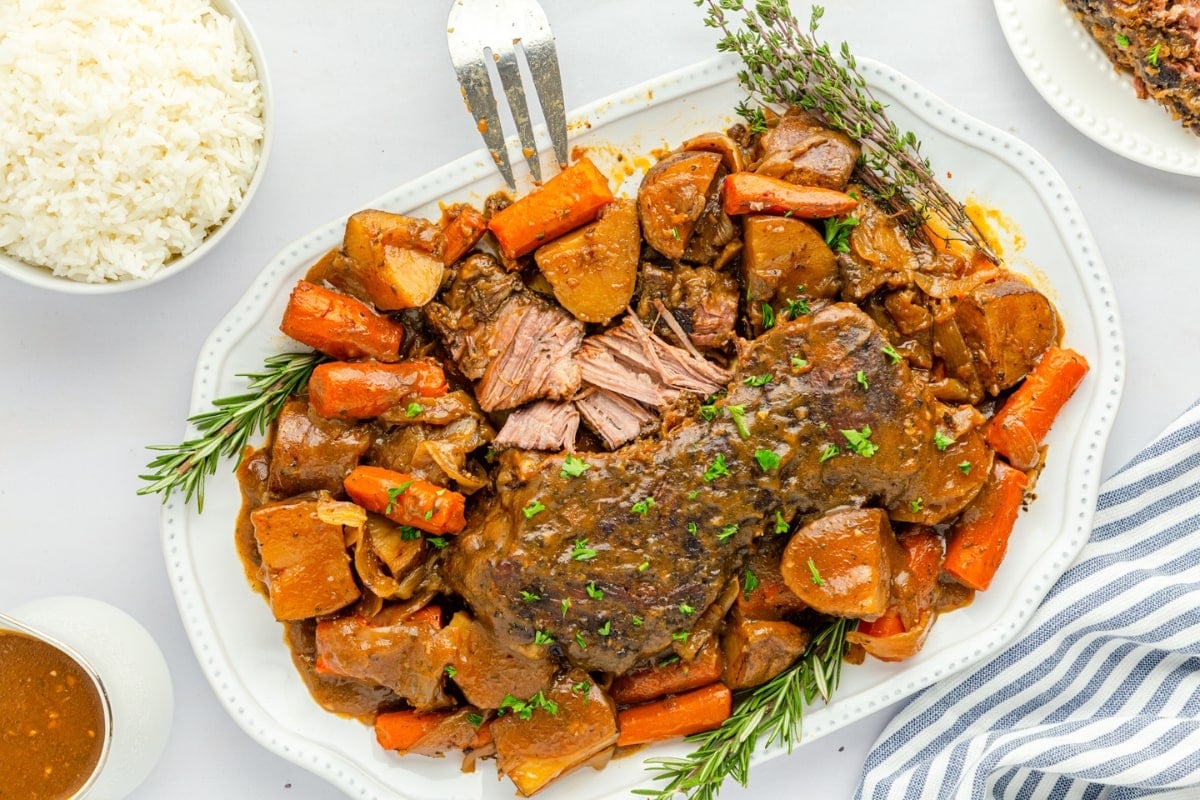
The classic starting point is Crockpot Pot Roast, which produces a meal that tastes like you put in hours of effort when you really just assembled a few ingredients and walked away. Once you’re comfortable with low-and-slow cooking, slow cooker meals become part of your weekly rotation without any drama. The bonus is that most of these recipes produce leftovers, which means lunch is already sorted.
5. How to Read a Recipe Before You Start
This sounds obvious, but most recipe mistakes happen because someone started cooking before reading the whole thing. Read the entire recipe first, then gather everything you need (this is called mise en place, which just means having things ready before you begin).
Look out for anything that needs to marinate, rest, or chill, as these are the steps most likely to catch you off guard. Sheet Pan Fajitas is a great example: the marinade needs 30 minutes, but if you read ahead and prep during that wait time, the whole meal comes together smoothly. Getting into the habit of reading first saves more dinners than any other skill on this list.

6. How to Understand Heat Levels
Most stovetop disasters come down to wrong heat. Using too-high heat on the wrong food is how garlic goes from golden to burnt in 30 seconds. A quick cheat sheet to keep in mind:
- High heat: boiling water, quick sears on steak or protein
- Medium-high heat: browning chicken, cooking shrimp, stir-frying
- Medium heat: sauces, sautéed vegetables, most everyday cooking
- Low heat: simmering soups and stews, gentle reheating
A practical way to practice heat control is making a dish that requires you to adjust throughout cooking. The cream sauce in Creamy Lemon Chicken is a good example because you sear the chicken on higher heat, then drop down to build the sauce.
Learning to read what the pan is telling you (the sound, the color, the smell) is more valuable than any timer.
7. How to Cook Pasta Properly
Pasta is one of the most cooked foods in any home kitchen, and it’s consistently undercooked or overcooked for one simple reason: people don’t use enough water or enough salt. A large pot, generously salted water, and tasting for doneness rather than relying on the clock are the three things that fix most pasta problems.
Al dente means the pasta still has a little bite. It should not be crunchy, but it also should not be soft. Cold Italian Tortellini Salad is a low-pressure way to practice pasta technique because you cook it, cool it, and assemble everything cold, so there’s no rush. From there, pasta becomes a genuinely quick weeknight option rather than something that requires a lot of thought.

8. How to Check Meat for Doneness
Cutting into meat to check if it’s done lets all the juices run out, which is exactly what you don’t want. The better way is a meat thermometer. It takes the guesswork out entirely, keeps meat juicy, and ensures everything is safe to eat.
Safe internal temperatures to know by heart:
- Chicken and turkey: 165°F
- Ground beef and pork: 160°F
- Whole cuts of pork: 145°F
- Steak (medium): 145°F, or 130-135°F for medium-rare
The meat temperature guide for grilling covers all the main proteins and doneness levels in one place if you want it handy. Once you own an instant-read thermometer and start using it, you’ll wonder how you ever cooked meat without one.
9. How to Make a Simple Marinade
A marinade is just acid plus fat plus seasoning, and it’s one of the highest-return skills in the kitchen. Even 30 minutes of marinating transforms the flavor of chicken, steak, or shrimp in a way that seasoning alone can’t quite match. The acid (lemon juice, lime juice, vinegar) helps tenderize; the fat (olive oil, butter) carries flavor; the seasoning does the rest.
Sheet Pan Steak Fajitas uses two different marinades side by side, which is a great way to see the concept in action. Once you understand the formula, you can riff on it endlessly, swapping citrus for vinegar or adding different spice blends depending on what you’re making. It also pairs naturally with the seasoning skills from earlier in this list.
10. How to Batch Cook and Use Leftovers
Batch cooking isn’t a meal prep influencer thing. It’s just the practical habit of making more than you need in one go and turning those leftovers into a second (or third) meal. A slow cooker full of shredded chicken can become tacos, rice bowls, quesadillas, or a quick soup throughout the week with almost no extra work.
The key is cooking in ways that reheat well and translate to different meals. The Crockpot Pot Roast makes enough for sandwiches the next day, and roasted vegetables can go into grain bowls, pasta, or frittatas without any fuss. Thinking one meal ahead while you cook is a habit that makes the whole week easier without requiring more time in the kitchen.
Start With One Skill at a Time
You don’t need to master all ten of these at once. Pick one this week, cook a couple of recipes around it, and let it become second nature before you move on. Seasoning and skillet work are the best entry points because they apply to almost everything else you’ll ever cook.
The goal isn’t perfection. It’s building enough confidence that standing in the kitchen at 6 pm feels manageable rather than exhausting. These basic cooking skills are the foundation, and once they’re in place, you’ll find that the recipes you’ve always wanted to try suddenly seem a lot more doable.
FAQs
Seasoning and skillet work are the best starting points because they apply to almost every recipe you’ll ever make. Once those feel comfortable, roasting vegetables and reading a recipe properly before you start will make the biggest difference to your everyday cooking.
Not at all. A good skillet, a sheet pan, a large pot for pasta, and an instant-read thermometer will cover the majority of what you need. A slow cooker is worth adding once you’re ready, but you can get a long way with just the basics.
Most people find that a few weeks of consistent cooking is enough to feel genuinely confident. The key is repetition rather than variety, so cooking the same style of recipe a few times back to back builds the muscle memory faster than trying something new every night.
Under-seasoning is almost always the culprit. Most home cooks use far less salt than a recipe actually needs, especially when building flavors throughout the cooking process. Try seasoning at each stage rather than just at the end, and taste as you go.
Start with one slow cooker meal per week and plan two dinners around it. A pot roast on Sunday, for example, naturally becomes sandwiches or a rice bowl later in the week with almost no extra effort. Once that rhythm feels easy, you can build from there.